Premium Polyethylene Barrier Systems Tailored for Extreme UV & High Thermal Cycles in Mazar-i-Sharif
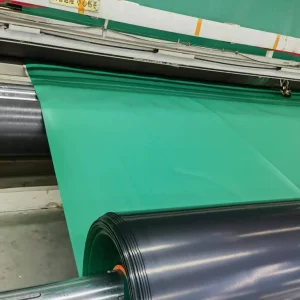
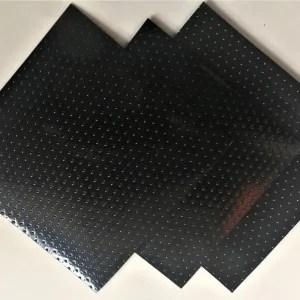
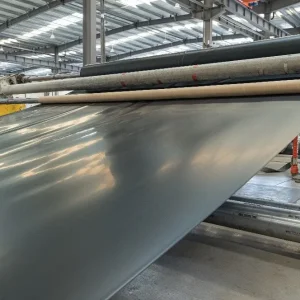
Mazar-i-Sharif & Balkh Province Regional Industrial Whitepaper
Mazar-i-Sharif, serving as the economic core of Balkh Province and the paramount commercial node connecting Northern Afghanistan with Uzbekistan and Central Asian trade corridors via the Hairatan port, is currently undergoing a pivotal transformation in civil infrastructure, agricultural modernizations, and hydraulic resource preservation. The geographic profile of the Balkh basin is characterized by an arid to semi-arid climate, intense solar ultraviolet irradiance, high diurnal temperature differentials spanning over 35°C in summer cycles, and fine-grained, highly permeable loess topsoils. Under these rigorous environmental parameters, traditional unlined earth canals, concrete retention structures, and open surface reservoirs suffer from massive water losses through infiltration and micro-cracking, often losing up to 60% of total conveyed water volume prior to reaching agrarian destinations.
Technical Information Gain Notice: In northern drylands like Mazar-i-Sharif, hydraulic efficiency relies heavily on synthetic containment integrity. Polyethylene geomembranes engineered with minimum 2.5% carbon black distribution and high thermal oxidative induction time (OIT) prevent chemical weathering, subgrade softening, and uncontrolled groundwater migration across critical civil developments.
The rapid escalation of major regional civil engineering initiatives—including primary irrigation arteries feeding into the Balkh river delta, secondary branch canals linked with the landmark Qosh Tepa canal enterprise, municipal solid waste management facilities, and strategic mineral extraction sites—has positioned high-performance HDPE, LDPE, EVA, and LLDPE geomembranes as indispensible civil engineered materials. Local contractors, international development bodies, and municipal authorities serving Mazar-i-Sharif require geosynthetics that deliver absolute impermeability, extreme puncture resistance against gravel subgrades, and decades-long oxidation resistance under relentless sun exposure.
Market Evolution, Environmental Regulations, and Engineering Material Standards
Globally, the market for geosynthetic containment membranes is projected to exceed USD 7.2 Billion by 2030, driven primarily by stringent environmental mandates governing industrial effluent containment, mining heap leach pad isolation, and agricultural drought protection. Modern geo-engineering has transitioned from early low-density film applications to sophisticated multi-layer co-extruded polymers that incorporate advanced Hindered Amine Light Stabilizers (HALS) and primary/secondary antioxidants.
In regions suffering from acute water stress—such as the Middle East and Central Asia—the deployment of smooth and textured polyethylene earthwork films has become the baseline benchmark for water conveyances. The adoption of double-color geomembranes (featuring a white reflective upper surface and a black core) has seen a 35% surge globally due to its capability to reduce membrane surface temperatures by up to 15°C during deployment, drastically minimizing thermal expansion wrinkles and thermal-induced stress cracking during seam welding.
Triple-tier blow molding technology delivering uniform gauge control, enhanced multi-directional tensile yield, and optimized resin dispersion.
Full compliance with GRI-GM13 (HDPE) and GRI-GM17 (LLDPE) international specifications, ensuring verifiable chemical and physical performance.
Complete resistance to aggressive alkaline soils, acidic mining leachates, organic hydrocarbons, and continuous biological degradation.
State-of-the-Art Manufacturing Synergy, Technical Expertise, and Global Export Capability
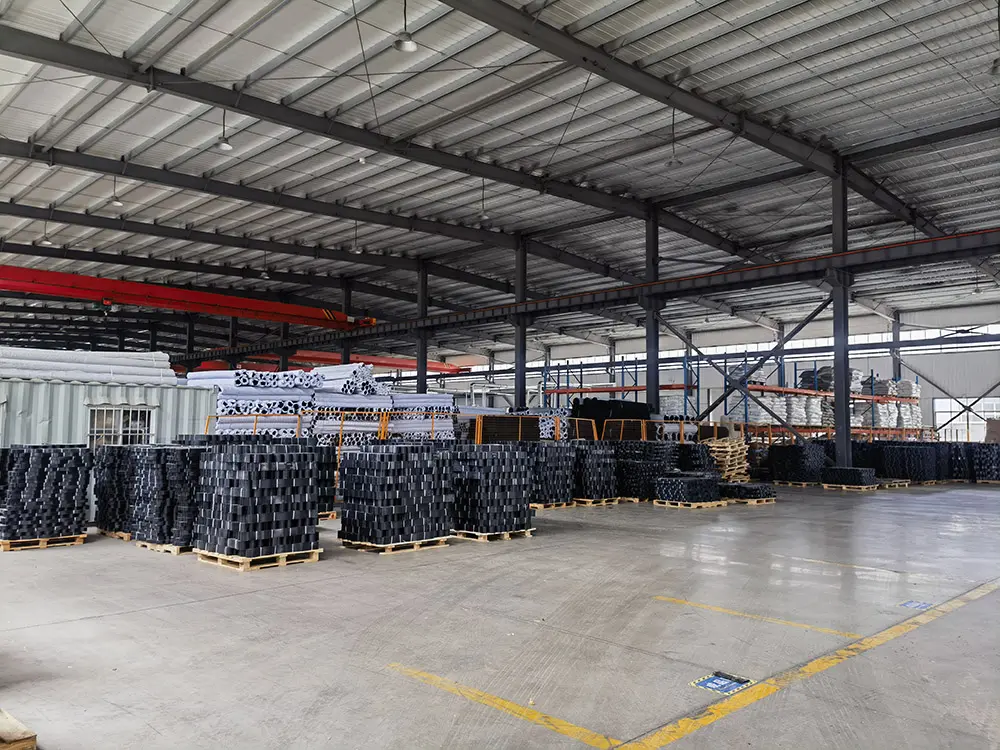
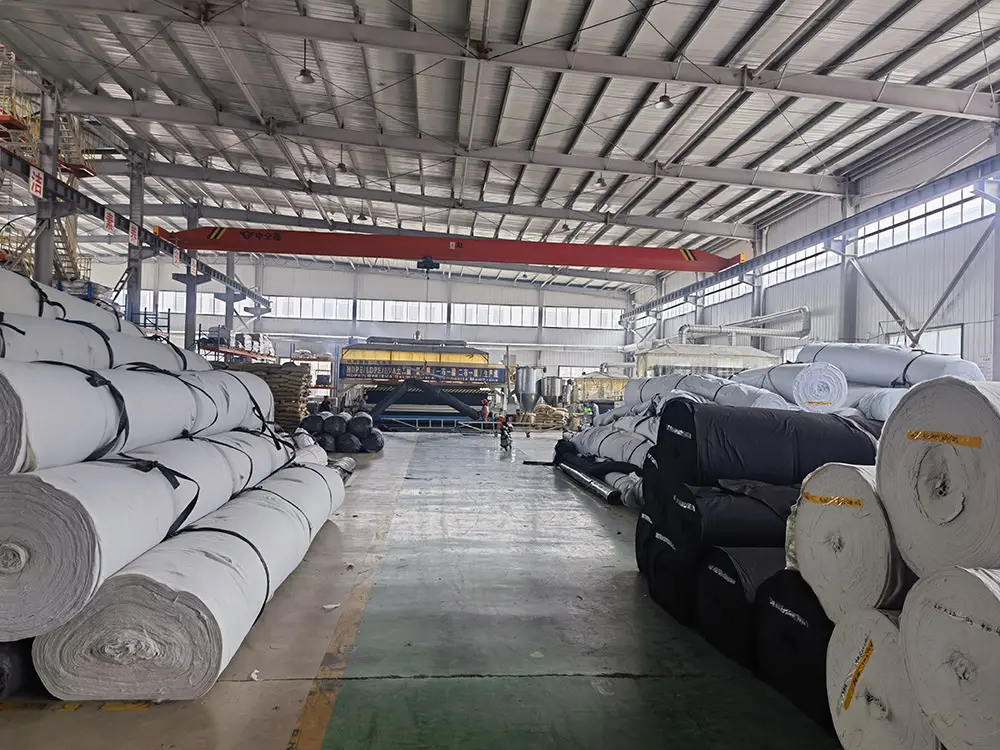
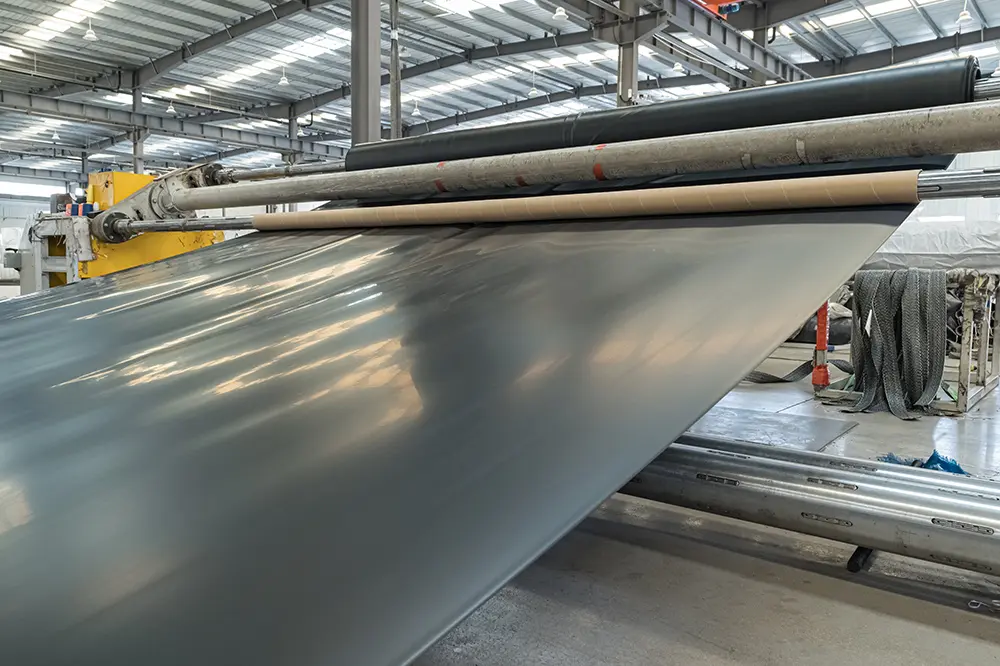
Taian Changhong Engineering Materials Co., Ltd. stands as a premier global developer and manufacturer of environmental geosynthetics. Our manufacturing ecosystem integrates high-capacity continuous extrusion lines capable of producing wide-width geomembranes up to 8 meters, eliminating up to 30% of field welding requirements for large-scale civil engineering projects.
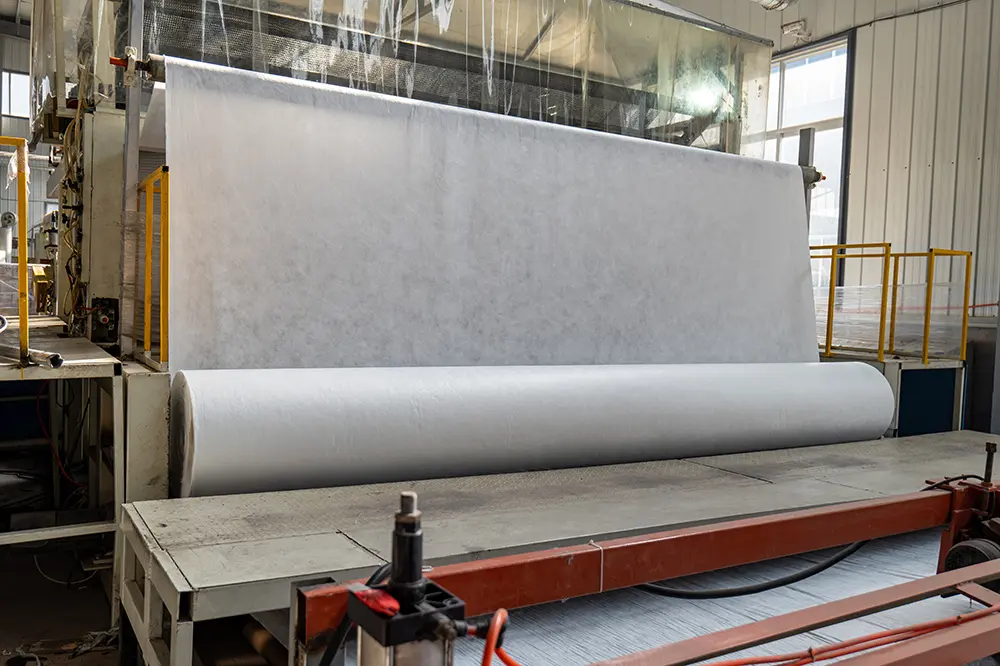
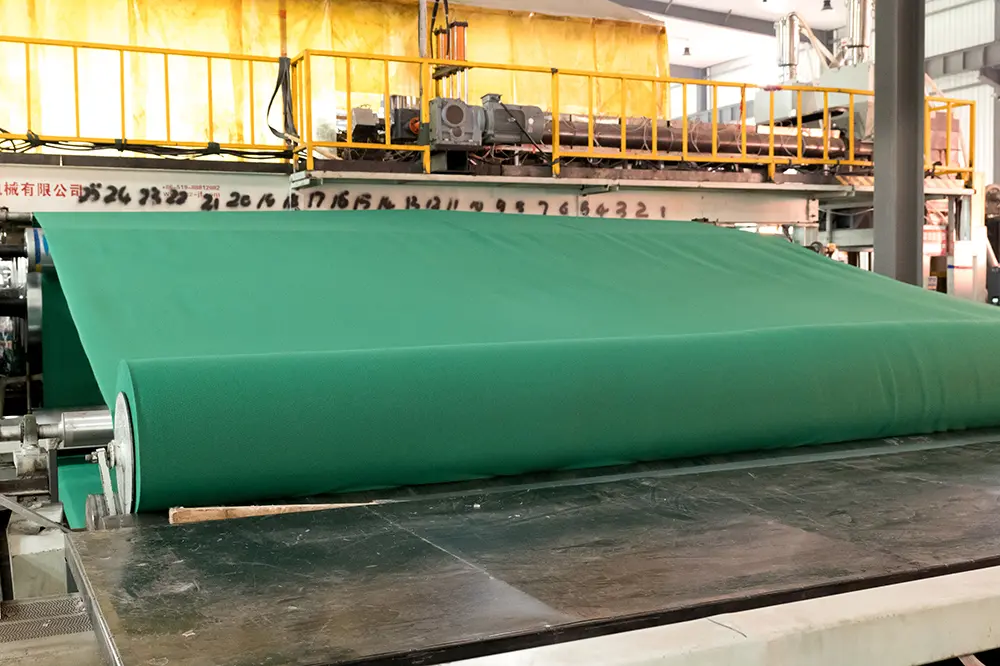
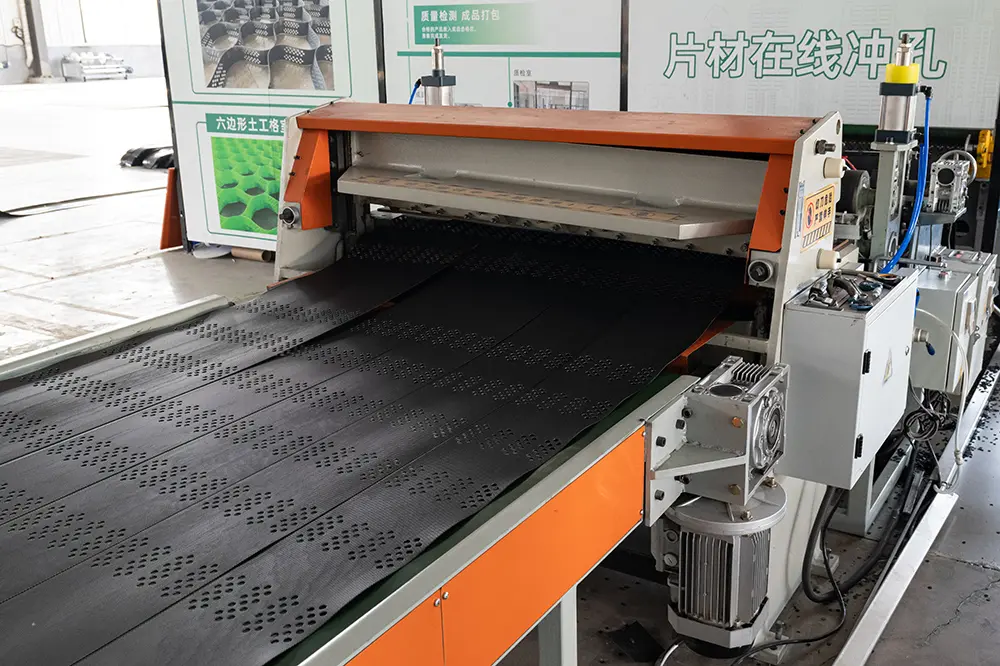
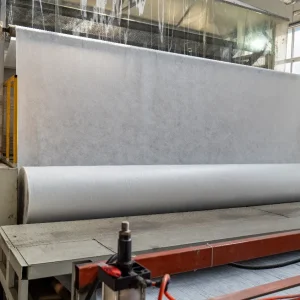
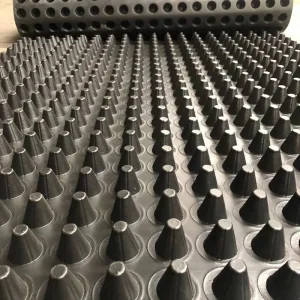
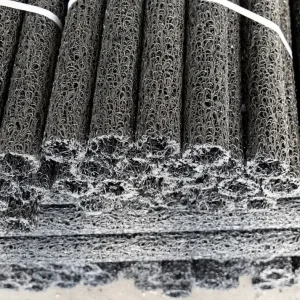
Our company specializes in the comprehensive production of smooth geomembranes, rough/textured geomembranes, double color geomembranes, and non-woven geotextiles (polyester short fiber, polyester long fiber filament, polypropylene short fiber, and hot-rolled variations), alongside drainage boards, drainage nets, geogrids, geocells, flexible permeable pipes, and plastic blind drains. Relying on a long-term, direct raw material supply agreement with world-class polymer refiners and maintaining strict chemical formulas, we customize materials including HDPE, LDPE, EVA, and ECB to exact engineering specifications.
Workforce Expertise: Operating under ISO9001, ISO14001, and OHSAS18001 certifications, our facility employs over 60 dedicated specialists, including 3 chief chemical process engineers, 5 senior mechanical engineers, and 9 professional equipment operation engineers with decades of hands-on synthesis experience.
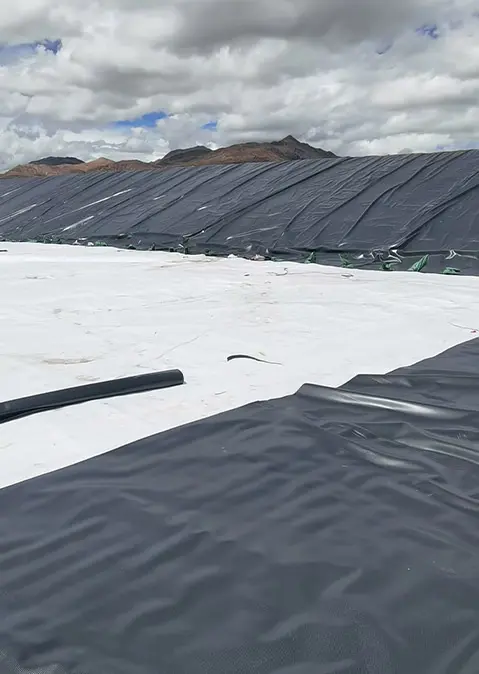
Physical & Mechanical Parameters of Changhong HDPE Series vs International Standards (GRI-GM13)
| Property Test Parameter | Test Method | 0.75 mm (30 mil) | 1.0 mm (40 mil) | 1.5 mm (60 mil) | 2.0 mm (80 mil) |
|---|---|---|---|---|---|
| Thickness (Nominal) | ASTM D5199 | 0.75 mm | 1.00 mm | 1.50 mm | 2.00 mm |
| Density (g/cm³) | ASTM D1505 / D792 | ≥ 0.940 | ≥ 0.940 | ≥ 0.940 | ≥ 0.940 |
| Tensile Strength at Yield (N/mm) | ASTM D6693 (Type IV) | 11 N/mm | 15 N/mm | 22 N/mm | 29 N/mm |
| Tensile Strength at Break (N/mm) | ASTM D6693 (Type IV) | 20 N/mm | 27 N/mm | 40 N/mm | 53 N/mm |
| Elongation at Yield (%) | ASTM D6693 (Type IV) | 12% | 12% | 12% | 12% |
| Elongation at Break (%) | ASTM D6693 (Type IV) | ≥ 700% | ≥ 700% | ≥ 700% | ≥ 700% |
| Tear Resistance (N) | ASTM D1004 | 93 N | 125 N | 187 N | 249 N |
| Puncture Resistance (N) | ASTM D4833 | 240 N | 320 N | 480 N | 640 N |
| Carbon Black Content (%) | ASTM D1603 / D4218 | 2.0 - 3.0 % | 2.0 - 3.0 % | 2.0 - 3.0 % | 2.0 - 3.0 % |
| Standard OIT (Minutes) | ASTM D3895 | > 100 min | > 100 min | > 100 min | > 100 min |
| High Pressure OIT (Minutes) | ASTM D5885 | > 400 min | > 400 min | > 400 min | > 400 min |
Custom-Tailored Systems Solving Specific Northern Region Environmental & Engineering Challenges
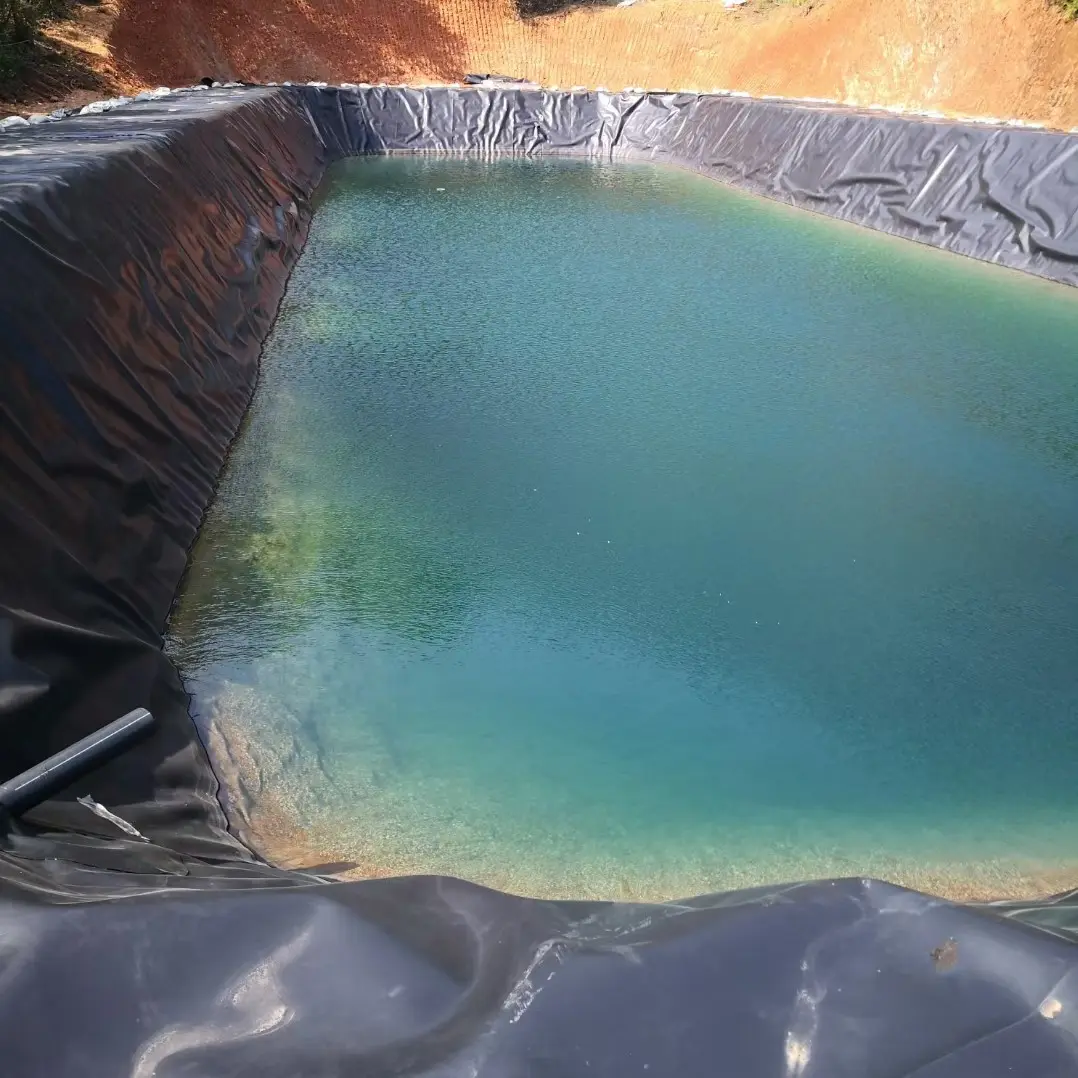
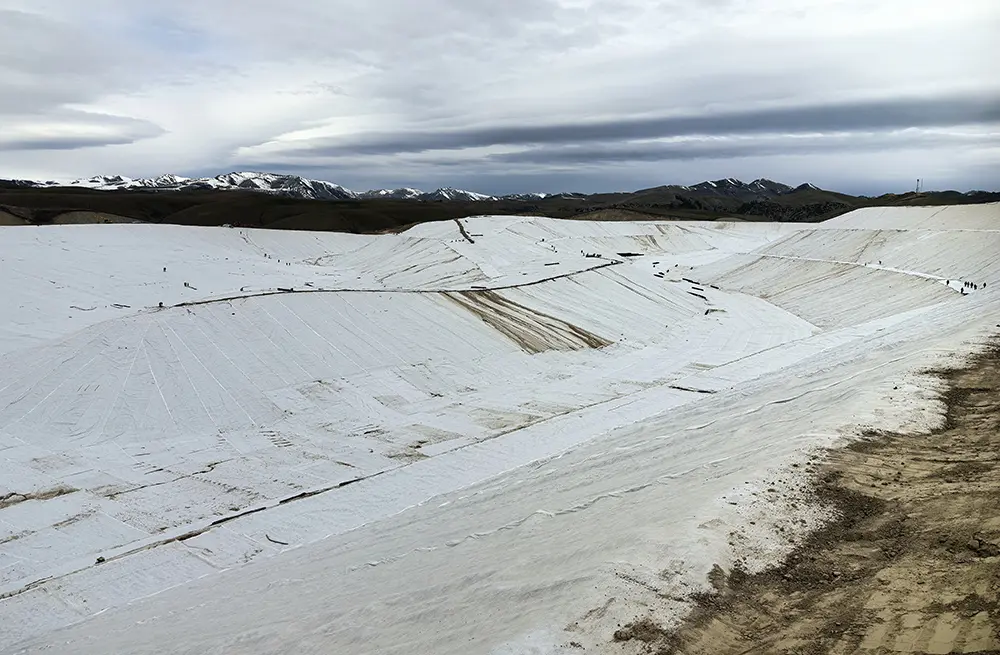
Conveyance loss mitigation across agricultural channels in Balkh river delta. Smooth HDPE and EVA sheets provide absolute impermeable sealing, preserving precious water stocks against coarse subsoil infiltration.
Sanitary landfill bottom liners and cap closures for urban Mazar-i-Sharif municipal development. Double-layer geomembrane barriers isolate hazardous leachate, safeguarding subterranean aquifers.
Mining containment liners engineered for extraction of minerals and hydrocarbons in Northern Afghanistan. High chemical tolerance against concentrated acids, alkaline solutions, and heavy mineral solvents.
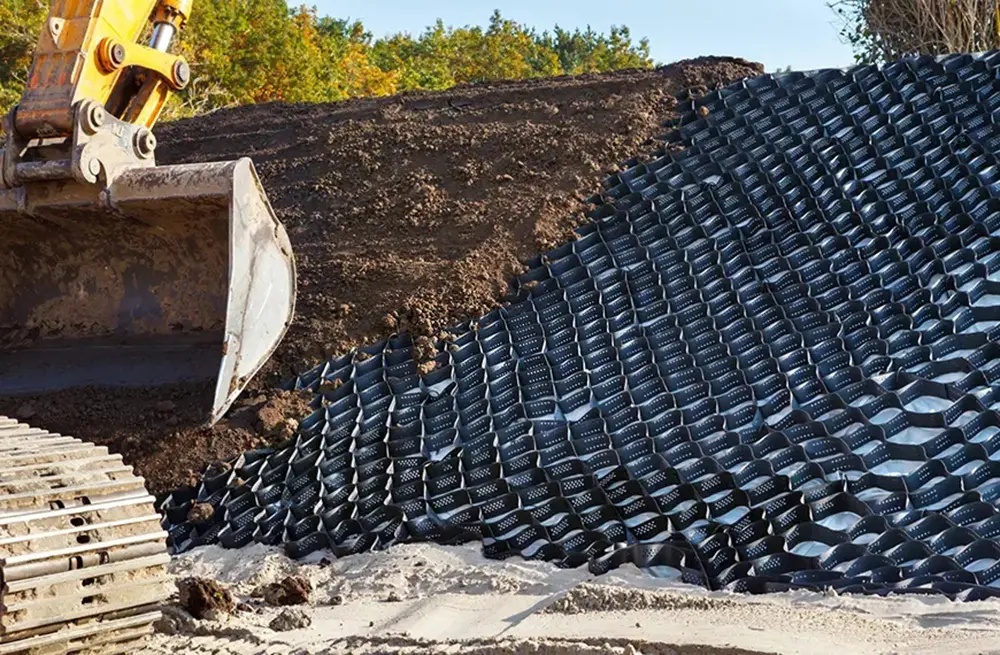
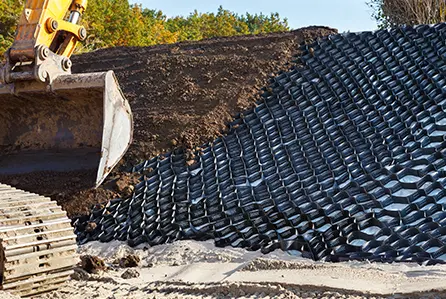
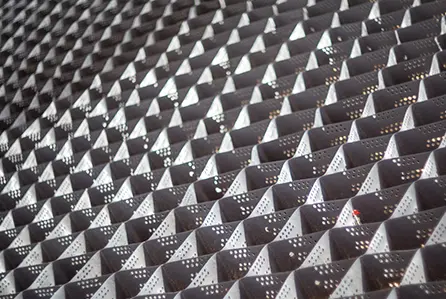
Combining non-woven filament geotextiles and plastic geocells for roadbed reinforcement along Balkh-Hairatan logistics corridors, preventing differential settlement and subsoil pumping under heavy axle loads.
Non-toxic, environmentally safe HDPE/LDPE liners for commercial fish, shrimp, and livestock water supply ponds, ensuring clean water conditions while resisting root penetration and burrowing organisms.
Single and double-sided coarse textured geomembranes designed to maximize friction angle on steep embankment side slopes, preventing soil-geomembrane interface slippage in mountainous terrains.
Proven Field Performance Across Major Infrastructure & Environmental Installations
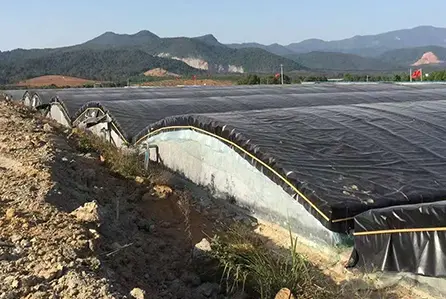
Optimizing Logistics, Field Welding Quality Control, and Subgrade Preparation
Shipping bulk geosynthetics into Mazar-i-Sharif is streamlined through multimodal transport routes terminating at the Hairatan rail and road border hub. Taian Changhong provides heavy-duty export packaging utilizing multi-layer woven geotextile wrapping and high-tensile steel banding, protecting rolls from physical abrasion and moisture intrusion during transshipment.
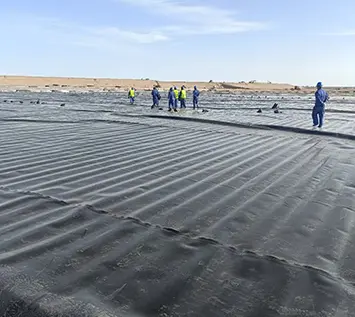
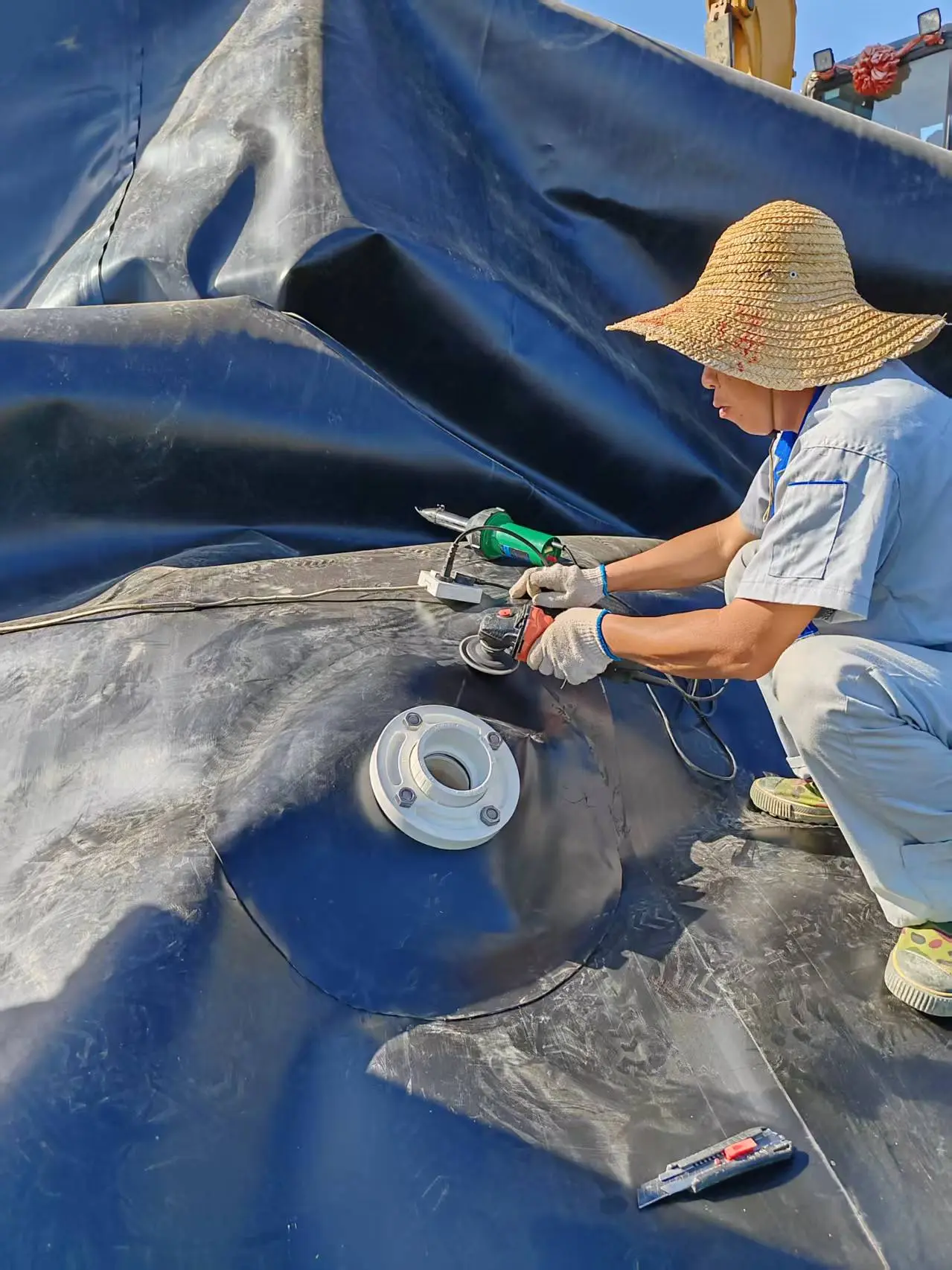
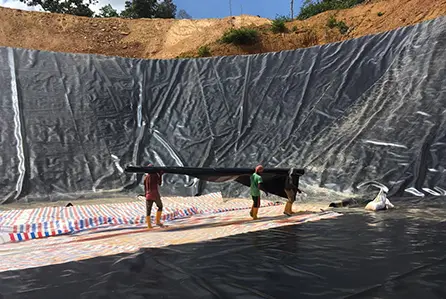
For high-integrity containment, double-track hot wedge welding equipment should be utilized for linear field seams, creating an internal air channel for non-destructive pressure testing. Air channel testing under 0.15 - 0.20 MPa pressure held for 5 minutes verifies 100% seam integrity before backfilling.
Given the angular gravel particles present in Northern Afghan soils, subgrade earthwork must be compacted to minimum 95% Standard Proctor density. A non-woven filament geotextile cushion layer (minimum 300 g/m²) is strongly recommended beneath the geomembrane to prevent localized point-puncture stresses.
Due to ambient summer surface temperatures in Mazar-i-Sharif reaching over 55°C on dark surfaces, field crews must allow a 2% to 3% loose slack allowance during unrolling to accommodate nocturnal thermal contraction without inducing strain at anchor trenches.
Technical Inquiries & Expert Guidance for Mazar-i-Sharif Geomembrane Buyers
High-Density Polyethylene (HDPE) provides superior chemical resistance, exceptional tensile strength, and significantly higher UV stability compared to standard PVC. Unlike rigid concrete, which cracks under Mazar-i-Sharif's expansive clay subsoils and sharp winter freeze-thaw cycles, HDPE geomembranes possess over 700% elongation flexibility, maintaining zero-leakage performance for over 30 years.
Double color geomembranes feature a white top co-extruded layer and a black bottom layer. The white surface reflects up to 70% of solar radiation, reducing membrane temperature during daytime deployment by 10°C to 15°C. This suppresses thermal expansion bubbling, minimizes thermal stress cracking, and simplifies visual inspection for accidental punctures before backfilling.
Coarse textured geomembranes are specifically engineered for sloped applications exceeding 1V:3H gradient. The mechanical friction texturing increases the interface friction angle between the liner and adjacent soil geotextiles, preventing catastrophic slope sliding of cover soil layers on landfill side slopes or steep canal banks.
We formulate our geomembranes with premium virgin polyethylene resins combined with 2.0% to 3.0% fine-particle carbon black (particle size < 25nm) and specialized Hindered Amine Light Stabilizers (HALS). Our products achieve a High-Pressure Oxidative Induction Time (HP-OIT) exceeding 400 minutes under ASTM D5885 testing, guaranteeing resistance to photo-oxidation even under continuous solar exposure.
A standard 40ft High Cube container can accommodate approximately 16 to 19 metric tons of packaged geomembrane rolls depending on thickness (e.g., ~15,000 m² of 1.0mm thickness or ~10,000 m² of 1.5mm thickness). Rolls are tight-wound on rigid cores to optimize volume utilization and prevent core collapse during transit.
Comprehensive Anti-Seepage, Drainage, Reinforcement, and Slope Protection Product Range
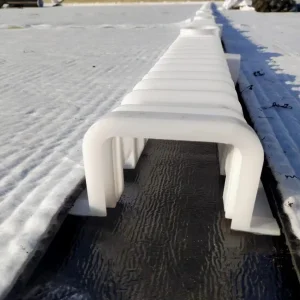
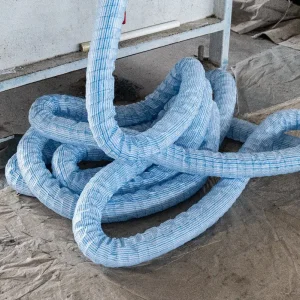
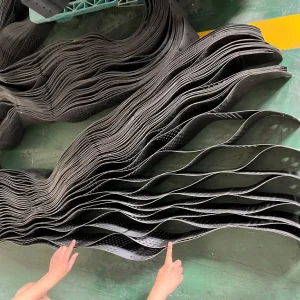
Best Practices in Geosynthetic Selection, Testing Standards, and Field Workmanship
 Changhong