Why Choose Siphonic Pipe for Commercial Drainage?

Time:2026-09-20 Author:Sophia
0%

Commercial buildings need drainage that performs during intense rainfall, not only on clear days. A Siphonic Pipe system uses full-bore flow to create negative pressure inside the network. This action moves stormwater quickly across long horizontal routes. It can reduce vertical stacks, underground connections, and visible service congestion. More usable ceiling space.

Professor John Swaffield, a respected building-drainage researcher, explains: “Siphonic performance depends on the complete system, not one impressive component.” His view reflects practical engineering experience. Designers must assess roof geometry, rainfall intensity, outlet positioning, pipe diameters, and discharge points together. A correctly designed Siphonic Pipe network can support large warehouses, airports, shopping centres, and manufacturing facilities. It may also simplify coordination with lighting, ventilation, and fire-protection services.

Still, this solution is not a magic shortcut. Poor outlet placement can delay priming. Incorrect gradients may increase installation risks. Air pockets can reduce expected performance. These details matter.

Reliable projects begin with accurate hydraulic calculations and verified drawings. They continue with suitable materials, careful jointing, and controlled installation. HDPE is often selected for its flexibility, corrosion resistance, and lightweight handling. However, material choice should match temperature, fire strategy, loading, and site conditions. Regular inspections remain sensible, even when the system is designed for low routine maintenance. A Siphonic Pipe system saves space only when its design, installation, and maintenance work as one coordinated process. That is the part some promotional explanations overlook.
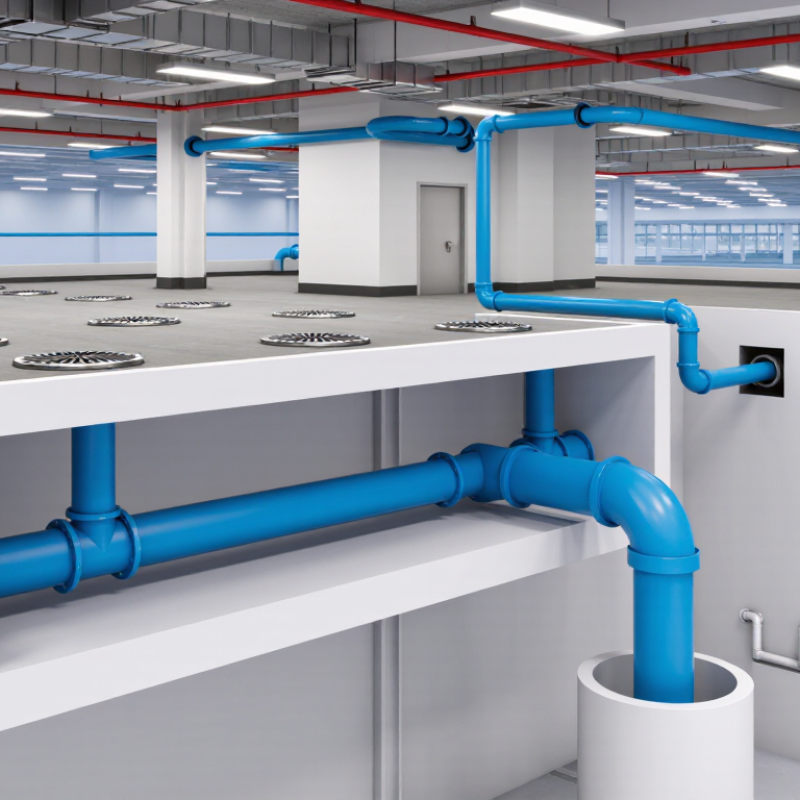
Why Choose Siphonic Pipe for Commercial Drainage?

What Is a Siphonic Pipe Drainage System?

A siphonic pipe drainage system removes rainwater from large commercial roofs through specially designed outlets and pipework. Unlike conventional gravity drainage, it works with pipes running full of water. The outlet limits air entry, allowing water to form a continuous column. As water drops through vertical pipes, gravity creates negative pressure inside the network. This pressure pulls water from roof outlets, even across long horizontal sections.

Slope is minimal. That saves ceiling space. In commercial buildings, one network can serve broad roof areas with fewer downpipes. Designers must calculate rainfall intensity, pipe diameter, outlet flow, and pressure carefully.

A poorly balanced system may create noise, vibration, or slow drainage. Field reviews often show that installation accuracy matters as much as hydraulic design. Joints need reliable seals, supports must resist movement, and outlets must remain accessible for inspection.

Tips: Confirm local rainfall data before sizing the system. Keep outlet screens clean and inspect them after storms. Use approved calculations, tested components, and qualified installers. Do not treat a siphonic layout like ordinary gravity pipework. The difference is easy to miss. Emergency overflow paths are also essential. Blocked outlets can leave deep water near roof penetrations, especially after leaves collect around guards. Access is often overlooked during construction, and that weakness deserves correction.

How Siphonic Drainage Works in Commercial Buildings

In commercial buildings, siphonic drainage moves rainwater through a full-bore pipe network. Specially designed outlets limit air entry at the roof surface. As water fills the vertical drops, gravity creates negative pressure inside the pipes. This pressure pulls water quickly toward a collection point, even through long horizontal runs. The result is compact drainage with fewer vertical stacks and less roof congestion. It looks simple from below. But the engineering is not simple.

Engineers size each outlet, pipe diameter, elevation, and discharge point using hydraulic calculations. They check rainfall intensity, roof zones, emergency overflow paths, and pressure changes. A properly balanced system keeps water moving at high velocity and reduces stagnant pockets. During installation, level changes and poor joints can disturb the intended siphonic action. Small errors matter. Site inspections and pressure testing should support the design documents. The pipes also need secure supports, because changing loads can stress connections.

Siphonic pipe is useful where large roofs must drain efficiently without many internal columns. Warehouses, terminals, and retail buildings often benefit from this layout. Maintenance teams still need accessible outlets, debris control, and clear inspection records. Leaves, construction dust, or an incorrectly positioned outlet can reduce performance. No system is flawless. Designers should compare siphonic drainage with conventional gravity drainage, especially on small or irregular roofs. That comparison may reveal a cheaper or more forgiving option. Choosing well means matching the system to the building, not forcing one method everywhere.

Why Choose Siphonic Pipe for Commercial Drainage?

How siphonic drainage works in commercial buildings: as vertical head increases, hydrostatic pressure rises and can drive high-velocity, full-bore flow through the pipework. This allows roof water to be collected and conveyed through a compact drainage system. Actual pipe sizing and flow rates must be confirmed by hydraulic design, including rainfall intensity, pipe diameter, friction losses and fittings.

Hydraulic reference: Pressure values use p = ρgh for water with ρ ≈ 1,000 kg/m³ and g ≈ 9.81 m/s². Ideal velocity values use v = √(2gh); real systems have lower velocities because of friction and local losses.

Key Benefits of Siphonic Pipes for Commercial Drainage

Why Choose Siphonic Pipe for Commercial Drainage?

Siphonic pipes can move rainwater through a full-bore system, using negative pressure during intense storms. This design can carry more water through smaller pipes than many conventional layouts. According to BS EN 12056-3, roof drainage design must consider rainfall intensity, roof area, outlet capacity, and hydraulic calculation.

For example, 1,000 square metres receiving 100 millimetres of rain per hour produces approximately 27.8 litres per second. That flow needs careful sizing.

27.8
litres per second
1,000 square metres receiving 100 millimetres of rain per hour

Fewer vertical downpipes can create more usable space inside warehouses, malls, and transport buildings. Horizontal pipework can also run beneath the roof, reducing visible services and ground-level excavation. Rainfall data should come from reliable intensity-duration-frequency records, such as NOAA Atlas 14 in the United States. Local codes remain essential. They vary.

The benefits extend beyond appearance. A coordinated system can reduce pipe congestion and simplify structural planning. Full-bore flow may also improve self-cleansing performance when correctly designed and maintained.

However, siphonic drainage is not automatically better. Poor outlet placement, blocked strainers, or incorrect slopes can undermine performance. The designer must verify emergency drainage, overflow routes, and access for inspection.

Field experience shows that commissioning matters. A drawing alone cannot prove hydraulic performance.

Design and Installation Requirements for Siphonic Systems

Why Choose Siphonic Pipe for Commercial Drainage?

A siphonic drainage system needs more than specialized pipework. Its performance begins with accurate roof surveys and dependable rainfall data. Engineers should calculate outlet capacity, pipe diameter, flow velocity, and available discharge head. The design must keep pipes full during peak rainfall. Air entry can break the siphonic action. Quickly.

Roof outlets need secure clamping and carefully sealed connections. Their locations should match roof falls, waterproofing details, and maintenance access.

Horizontal pipes are commonly installed with limited slope, but they still need correct alignment and support. Hangers must resist water weight, thermal movement, and hydraulic forces.

Sharp offsets deserve attention. They can disturb flow and complicate cleaning.

Installation teams should follow coordinated drawings, approved jointing procedures, and verified tolerances. Penetrations need suitable fire and weather protection.

The discharge point must connect safely to the below-ground network without creating back pressure. A practical inspection should include outlet checks, joint examination, support spacing, and a controlled water test.

Field inspections often find small issues, such as an unsealed access point or a misplaced bracket. These details seem minor. They are not.

Designers should also allow secondary drainage for blocked outlets and unusually intense storms. One imperfect assumption can affect the whole roof.

Review it before the first pipe is fixed.

Maintenance and Application Considerations for Siphonic Drainage

Why Choose Siphonic Pipe for Commercial Drainage?

Siphonic drainage can move roof water through smaller horizontal pipes. It uses controlled, full-bore flow instead of gravity flow. However, maintenance must begin during design, not after a blockage. Roof outlets need visible access, secure covers, and clear inspection zones. Debris around an outlet can disrupt the air seal quickly. The U.S. EPA reports that very heavy precipitation increased by about 27% in the contiguous United States between 1958 and 2022. Local rainfall data now deserves closer attention. NOAA Atlas 14 should guide rainfall intensity and return-period calculations.

The weak point is often not the hydraulic model. It is poor access. Maintenance teams should inspect outlets, pipe supports, joints, and discharge points after major storms. They should also check for leaves, sediment, damaged screens, and unexpected ponding. A clean drawing can still hide a difficult inspection route. That assumption deserves challenge. Written inspection records should include rainfall conditions, observed debris, cleaning dates, and corrective work. These records support reliable decisions and reveal repeated trouble areas.

Application conditions matter as well. Siphonic systems suit large roofs with concentrated drainage points and long horizontal runs. Small roofs may gain little benefit from added design complexity. Pipework must follow the approved layout, because unplanned slope changes can affect system performance. Temperature movement, fire compartments, structural deflection, and overflow routes require coordination. EN 12056-3 and local plumbing requirements remain important references. The best system is not always the smallest one.

FAQS

How does siphonic drainage move rainwater through a commercial building?

Roof outlets restrict air entry. As pipes fill, negative pressure pulls water through long horizontal runs. The system can reduce vertical stacks and roof congestion.

Which buildings usually benefit from siphonic drainage?

Large warehouses, terminals, and retail buildings often benefit. The layout works well with broad roofs and concentrated drainage points. Small or irregular roofs may gain little.

What information is needed before designing the system?

Engineers need a roof survey, rainfall data, outlet locations, elevations, and discharge details. They calculate pipe sizes, flow velocity, outlet capacity, and available discharge head. One assumption can affect the whole roof.

Why must roof outlets receive careful attention?

Outlets need secure clamping, sealed connections, clear access, and debris control. Leaves, dust, or a misplaced outlet can break the air seal quickly. Small details matter.

How should siphonic pipework be installed?

Installers should follow coordinated drawings and approved jointing procedures. Pipes need accurate alignment and secure supports. Sharp offsets can disturb flow and make cleaning harder.

What testing should happen after installation?

Inspectors should check outlets, joints, supports, penetrations, and discharge connections. A controlled water test can reveal leaks or poor flow. Field conditions may expose errors that drawings hide.

What maintenance does a siphonic drainage system require?

Teams should inspect outlets, screens, supports, joints, and discharge points after major storms. Records should note debris, rainfall conditions, cleaning dates, ponding, and repairs. Access is often the weak point.

Does siphonic drainage always provide the best solution?

No. Conventional gravity drainage may be cheaper or more forgiving on smaller roofs. Designers should compare both methods before choosing. The smallest system is not always the wisest one.

Conclusion

A Siphonic Pipe drainage system is designed to remove rainwater from large commercial roofs by using the full height of the pipe network to create negative pressure. Unlike conventional gravity drainage, it can move water horizontally at high speed through smaller, strategically arranged pipes, reducing the number of roof outlets and freeing valuable building space. This makes siphonic drainage especially suitable for warehouses, shopping centers, factories, airports, and other buildings with extensive roof areas.

Effective performance depends on careful hydraulic design, correct pipe sizing, suitable outlet placement, and professional installation. The system must be planned according to roof layout, rainfall conditions, building movement, and discharge capacity. When properly installed, it can improve drainage efficiency, reduce excavation and material requirements, and support more flexible architectural design. Regular inspections should check outlets, joints, supports, and discharge points for blockages or damage. Although maintenance needs are generally manageable, the system should be monitored to ensure reliable operation throughout its service life.


Sophia

Sophia

Sophia is a dedicated marketing professional with an exceptional depth of knowledge about her company's products and services. With a keen understanding of market trends and customer needs, she crafts insightful blog posts that not only inform but also engage readers, enriching the company’s online......