What Is HDPE Geonet and What Is It Used For?

Time:2026-11-09 Author:Liam
0%

Growing volumes of solid waste place steady pressure on landfill and drainage systems. The World Bank’s What a Waste 2.0 report estimates that the world generated 2.01 billion tonnes of municipal solid waste in 2016, with at least 33% not managed in an environmentally safe manner. That figure is broader than geosynthetics, but it highlights why dependable drainage layers matter. The details matter.

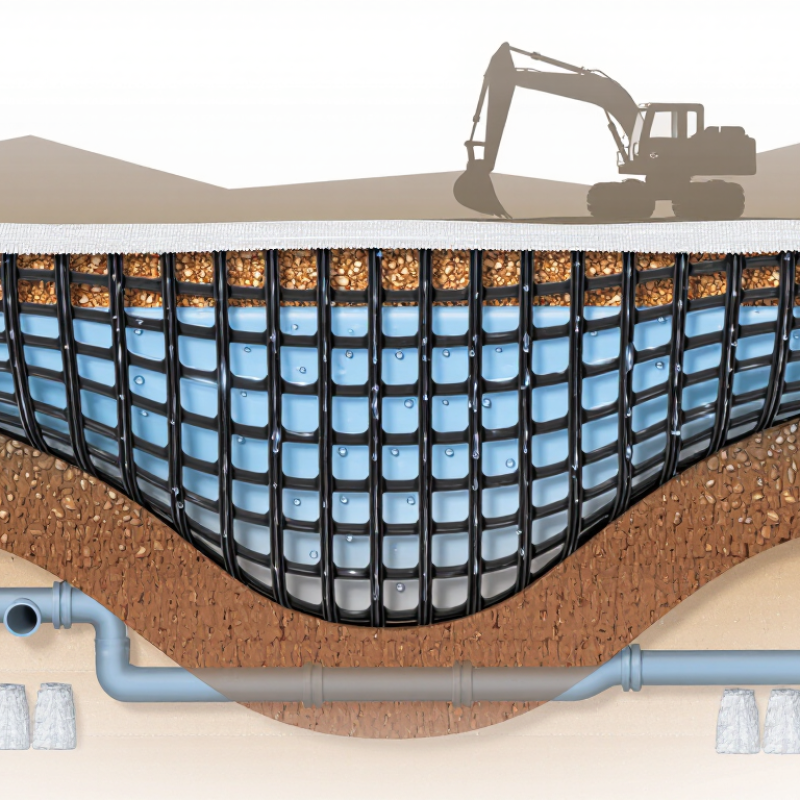
Hdpe Geonet is a lightweight, high-density polyethylene drainage core formed from intersecting polymer strands. Its open channels carry water or gas along the plane of the material. In a landfill, it may help collect leachate or move gas; in other projects, it can support drainage behind retaining walls, beneath roads, or around foundations. It is often paired with geotextile filters, which help limit soil particles entering the channels. The geonet drains. The filter protects it.

Performance depends on more than thickness or appearance. Compression, slope, contact materials, clogging, and long-term chemical exposure can all affect flow. ASTM D4716/D4716M provides a test method for measuring in-plane flow rate and hydraulic transmissivity under defined conditions. Those results should be considered alongside site-specific design requirements, not treated as a universal guarantee. A product that performs well in one installation may not suit another. That is an easy point to overlook. This guide explains how Hdpe Geonet works, where it is used, and what to check when comparing products.
What Is HDPE Geonet and What Is It Used For?

HDPE Geonet Defined: High-Density Polyethylene at ≥0.941 g/cm³

HDPE geonet is a drainage material made from high-density polyethylene, or HDPE. The polymer is commonly classified as high density at a resin density of at least 0.941 g/cm³. That figure describes the plastic itself, not the open, ribbed geonet’s bulk volume. The distinction matters: air spaces between ribs are part of the drainage structure, not a sign of low-density resin.

In a typical geonet, intersecting polymer ribs create continuous channels. Water can move along these channels when the material is placed beside a liner or within a drainage layer. Picture rainwater entering a landfill’s cover system and traveling through the ribbed core toward a collection pipe. Small details matter. Ribs must remain open under the pressure expected in service, and the geonet must suit the surrounding soil, filter fabric, and installation conditions.

The density threshold is useful, but it cannot confirm performance by itself. Resin grade, rib geometry, thickness, and long-term compression behavior also affect drainage capacity. Check the product’s measured properties and the project design, rather than relying on the HDPE label alone. Even a clearly stated density can leave questions about test conditions. That deserves a closer look.

Drainage-Core Design: Rib Geometry, Thickness, and Flow Paths

HDPE geonet is a drainage core made from intersecting polymer ribs. Its open channels carry water or gas toward a collection pipe. Rib height, spacing, and crossing angle shape the flow paths. A thicker core may provide more open space, but thickness alone does not guarantee better drainage. Under load, ribs can compress, and soil particles may obstruct channels. The design needs to match the expected pressure and fluid conditions.

Flow capacity should be checked under representative loading, not inferred from a product’s thickness. ASTM D4716 measures in-plane flow under specified normal stress and hydraulic gradient; results depend on those test conditions. For context, U.S. EPA municipal solid waste landfill criteria set a benchmark of less than 30 centimeters of leachate over the liner (40 CFR 258.40). That target makes sustained flow important. A rib layout that works in a clean laboratory test may perform differently when confined against soil. That deserves attention.

Tips: Check transmissivity data at the project’s expected stress and gradient. Confirm the test used the same flow direction as the installation. Allow for creep, intrusion, and clogging. A detail is easy to miss: folds or crushed edges can interrupt channels, even when the core looks intact.

ASTM D4716: Measuring In-Plane Flow Under Load and Hydraulic Gradient

What Is HDPE Geonet and What Is It Used For?
ASTM D4716: Measuring In-Plane Flow Under Load and Hydraulic Gradient

An HDPE geonet creates drainage pathways within its intersecting polymer ribs. Its performance depends on more than open space between ribs. ASTM D4716 measures constant-head hydraulic transmissivity: water flow along the geosynthetic under a stated compressive load and hydraulic gradient. Small details matter. A laboratory report should identify both conditions, the specimen arrangement, and test duration, so results can be compared meaningfully.

For example, a test might apply 200 kPa pressure and a hydraulic gradient of 0.1. These are illustrative conditions, not universal design requirements. The reported flow rate applies to that setup; it should not be treated as a guaranteed field value. FHWA’s NHI-07-092 geosynthetic design guidance highlights the need to consider installation and long-term performance when selecting drainage materials. Under sustained pressure, ribs may deform, and adjacent filter layers can affect flow. Load changes everything. A high result at low pressure may not represent a buried installation. Engineers should compare test data with expected soil pressure, water head, and contact materials. That comparison is imperfect, but ignoring it is worse.

Landfill and Mining Uses: Drainage Layers in Geosynthetic Systems

HDPE geonet is a drainage core made from intersecting polymer ribs. Its open channels carry liquid or gas along a surface. In landfill systems, it may sit above a low-permeability liner, helping collect leachate and move it toward drainage pipes. A geotextile filter is often placed against the soil side to limit clogging by fine particles. Small details matter.

In mining applications, geonets can form drainage layers beneath or within containment systems, including heap leach pads. They help direct collected fluids toward designed collection points and reduce unwanted water buildup. The required flow capacity depends on the slope, applied load, fluid conditions, and long-term compression. Designers should assess these factors together, rather than relying only on the material’s nominal drainage rating.

Installation affects performance too. Overlapping edges, secured seams, and careful protection from construction traffic help keep channels open. On site, neat drawings do not always match uneven subgrades or rushed handling. A crushed edge or poorly fitted joint may interrupt flow. That is easy to overlook. Project teams should check filter compatibility and drainage capacity under expected field conditions, then inspect the placed layer before covering it.

What Is HDPE Geonet Used For?

Typical drainage-layer sequences in landfill and mining geosynthetic systems

HDPE geonet provides an in-plane pathway for liquid drainage. It is often combined with geotextile filter facings to form a drainage geocomposite. These blocks show typical layer order only—not thickness, scale, or a prescribed design. Actual systems vary with site conditions and engineering requirements.

Performance Factors: Confining Stress, Soil Intrusion, and Flow Capacity

HDPE geonet is a polymer drainage core with intersecting ribs that form pathways for water or gas. It is often paired with geotextile filters to limit soil entry. Its performance depends on more than the product’s stated flow rate.

Confining stress matters. Soil, paving, or other overlying materials press the ribs together and reduce the open space between them. A flow rate measured without pressure may not represent performance beneath a compacted soil layer. Check test data at stresses and hydraulic gradients that resemble the project conditions. Small details matter.

Soil intrusion can narrow or block drainage channels, especially when fine particles pass through an unsuitable filter or enter at exposed edges. Filter compatibility should match the soil’s particle size and site conditions. Flow capacity also changes with installation wrinkles, seams, long-term compression, and possible clogging. A clean laboratory test is useful, but it cannot capture every field condition. I would not rely on one headline number alone; compare the test method, loading duration, and boundary conditions before specifying a drainage layer.

What Is HDPE Geonet and What Is It Used For? — Performance Factors: Confining Stress, Soil Intrusion, and Flow Capacity

Performance factor What changes in service Effect on drainage performance What to evaluate Design consideration
Confining stress Soil, waste, pavement, or other overlying materials apply normal pressure to the geonet. Higher pressure can compress the drainage channels and reduce the space available for in-plane water flow. Transmissivity or flow rate measured under representative normal stress, hydraulic gradient, temperature, and test duration. Use test conditions that represent the installed structure and consider the long-term load, not only the initial condition.
Soil intrusion Fine soil particles may enter the geonet channels through an adjacent interface, particularly if separation or filtration is inadequate. Intruding particles can occupy flow paths, reduce effective channel area, and contribute to clogging. Soil gradation, geotextile opening characteristics, interface compatibility, and the potential for particle migration. Where filtration is required, select a compatible geotextile separator or geocomposite and assess it with the site soil.
Flow capacity Flow depends on the geonet structure and the applied stress, hydraulic gradient, temperature, and boundary materials. Greater available channel space generally supports greater in-plane flow; measured capacity can differ substantially between test conditions. In-plane flow rate per unit width or hydraulic transmissivity using conditions relevant to the project. Compare test results only when the test conditions are comparable, and apply the project’s design factors and safety margins.
Duration of loading HDPE geonet ribs can deform over time when continuously loaded. Long-term deformation may reduce channel thickness and drainage capacity compared with short-term measurements. Short- and long-duration behavior under the anticipated load and temperature, where applicable. Consider sustained loading and creep when selecting a product for long-term drainage applications.
Adjacent materials Soil, geomembranes, geotextiles, and other contact surfaces affect how the geonet is confined and how water enters or leaves it. Interface conditions can change flow behavior and may influence intrusion, blockage, or uneven compression. Contact materials, interface configuration, drainage outlet details, and possible construction damage. Evaluate the complete drainage assembly rather than treating the geonet as an isolated component.
Temperature Operating temperature can affect polymer behavior and the measured flow performance of a geonet system. Flow results obtained at one temperature may not represent performance under different field conditions. Expected service temperature and the temperature used for performance testing. Use project-relevant temperature conditions when comparing test data or designing for demanding environments.
Typical applications HDPE geonets provide in-plane drainage pathways in engineered systems. They can convey water or other liquids toward collection points when properly designed and connected. Required drainage rate, applied load, surrounding materials, outlet arrangement, and service conditions. Common uses include landfill drainage and leachate collection, retaining-wall drainage, and drainage layers beneath or alongside engineered structures.

Note: Flow capacity is project- and condition-dependent; there is no single value that applies to every HDPE geonet. ASTM D4716 is commonly used to measure in-plane flow rate or hydraulic transmissivity of geosynthetics under specified test conditions. Confirm product data and design requirements for the intended application.

FAQS

What is an HDPE geonet used for?

Its intersecting polymer ribs create channels that carry water or gas along a surface. Small details matter.

How can a geonet help in a landfill?

It can sit above a low-permeability liner and guide collected leachate toward drainage pipes. A filter layer often faces the soil.

Where might geonets be used in mining systems?

They can provide drainage beneath or within containment systems, including heap leach pads. They direct fluids toward collection points.

What affects a geonet’s flow capacity?

Slope, applied load, fluid conditions, and long-term compression all matter. A published flow rating alone may not tell the full story.

Why does pressure matter?

Overlying soil or paving presses the ribs together and reduces channel space. Test results without pressure may not reflect field performance.

How can soil clog drainage channels?

Fine particles may enter through an unsuitable filter or exposed edges. The right filter depends on soil and site conditions.

What installation details should crews check?

Overlapping edges, secure seams, and protection from construction traffic help preserve open channels. Inspect the layer before covering it.

Is a clean laboratory test enough to choose a drainage layer?

Not by itself. Compare loading duration, test conditions, and expected field stresses. I would not rely on one headline number.

Conclusion

Hdpe Geonet is a drainage material made from high-density polyethylene with a density of at least 0.941 g/cm³. Its intersecting ribs form channels that carry water or other liquids along the plane of the material. Rib geometry, core thickness, and channel continuity influence how effectively the geonet drains, while its design must suit the loads and conditions expected in service.

In landfill and mining systems, HDPE geonets are commonly incorporated into geosynthetic drainage layers to help move collected fluids. ASTM D4716 provides a method for measuring in-plane flow under a specified hydraulic gradient and confining load. Actual performance depends on factors such as stress, soil intrusion into the drainage channels, and the geonet’s flow capacity. Selecting and evaluating the material therefore requires considering both its structural properties and the conditions of the surrounding system.


Liam

Liam

Liam is a dedicated marketing professional with a profound expertise in the industry, where he excels at highlighting the unique advantages of our core products. With a keen understanding of market trends and consumer needs, Liam frequently updates our company’s professional blog, providing......