Filament Geotextile is a vital component in modern construction. It plays a crucial role in soil stabilization, drainage, and erosion control. According to the Geosynthetic Materials Association (GMA), the geotextile market is projected to reach $9 billion by 2025. This rapid growth indicates its increasing importance in the construction industry.
Experts like Dr. Sarah Martinez, a leading figure in geotechnical engineering, emphasize the significance of Filament Geotextile in enhancing infrastructure. She states, "Proper use of Filament Geotextiles can dramatically improve project longevity." This assertion highlights how these materials aid in reinforcing structures, yet some projects still overlook their full potential, leading to unforeseen failures.
Despite the benefits, challenges remain. Some contractors may underutilize Filament Geotextile due to misconceptions or lack of knowledge. Addressing these gaps is essential for maximizing its effectiveness. As the industry evolves, the awareness of Filament Geotextile's benefits should continue to increase, fostering safer and more sustainable construction practices.
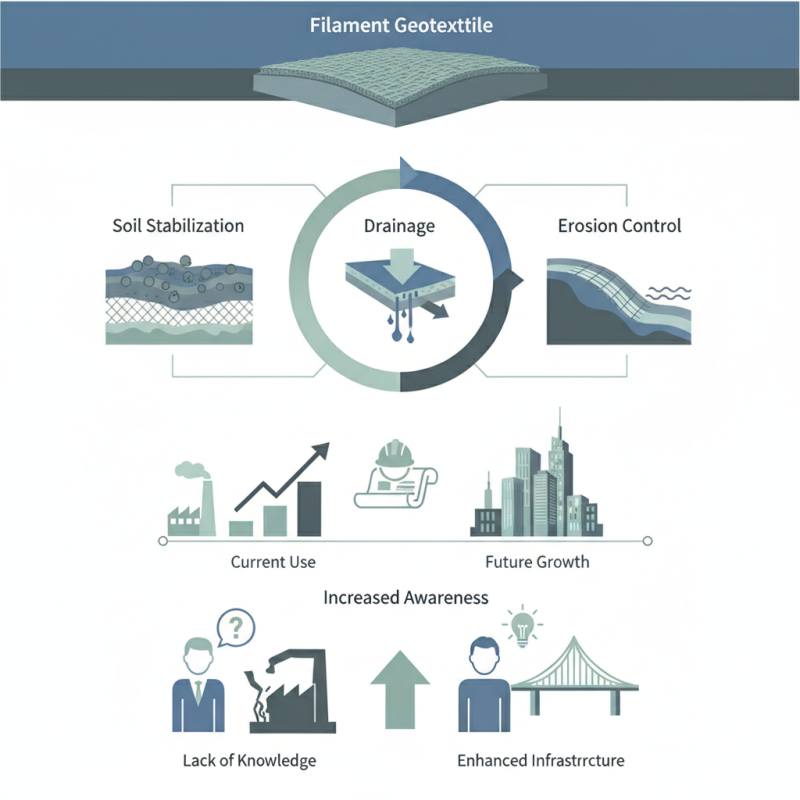
Filament geotextile is a crucial material used in construction. Made from long synthetic fibers, it serves multiple functions. This type of geotextile is designed to provide strength and stability to soils. Often made from polypropylene or polyester, its fibers are woven or non-woven to suit specific project requirements.
The composition of filament geotextile can vary. Typically, it features high tensile strength. Reports indicate that these materials can have tensile strengths exceeding 30 kN/m. This makes them suitable for applications in civil engineering, such as roadways and embankments. However, its effectiveness depends on correct application. Improper installation can lead to drainage failures or soil erosion.
Filament geotextile is typically permeable, allowing water to flow through. This prevents the buildup of hydrostatic pressure, protecting structures. The material also provides filtration. It helps in separating soil layers while allowing water passage. Studies show that it can extend the lifespan of projects by minimizing maintenance needs. However, the initial costs can be a concern for some projects, requiring a careful cost-benefit analysis.
Filament geotextile plays a vital role in construction projects. Its application spans various sectors, from road construction to land reclamation. According to a 2022 market analysis, the demand for geotextiles in civil engineering is expected to grow by 7.5% annually. This growth reflects an increasing recognition of their benefits.
In road construction, filament geotextiles help with soil stabilization. They enhance load distribution and prevent soil erosion. Data from the American Society of Civil Engineers indicates that projects utilizing geotextiles can reduce material costs by up to 30%. However, improper installation can lead to failures, contradicting these savings.
In drainage applications, these geotextiles allow water to flow while filtering out soil particles. They are frequently used in drainage systems as they help maintain proper stability. Yet, inadequate selection of the right geotextile type can lead to clogging and inefficiencies. Understanding soil properties is crucial, as a mismatch can undermine project integrity.
Filament geotextile plays a crucial role in soil stabilization. This material enhances the strength of soil structures. It is particularly beneficial in construction projects requiring durable and stable foundations. According to a recent industry report, 80% of engineers believe geotextiles improve overall project sustainability.
Using filament geotextile can significantly reduce erosion. This is vital for protecting infrastructure. One study found a 40% decrease in soil displacement when filament geotextiles were used. These materials create a barrier that holds soil particles together, preventing loss during heavy rains.
Cost-effectiveness is another major advantage. Though initial investments can be high, savings arise from fewer repairs and maintenance. A project analysis indicated a 25% reduction in long-term costs when geotextiles were used. However, some professionals note a lack of awareness about proper installation techniques. Misapplication can lead to reduced effectiveness, prompting the need for better training in the field. Overall, the benefits of filament geotextile are evident, yet challenges remain in ensuring it is used optimally.
| Aspect | Details |
|---|---|
| Material Composition | Polypropylene, Polyester |
| Primary Use | Soil stabilization and reinforcement |
| Benefits | Improves load distribution, prevents soil erosion, enhances drainage |
| Applications | Road construction, retaining walls, landscaping |
| Durability | Long-lasting, resistant to environmental conditions |
| Installation Ease | Quick and straightforward installation process |
Filament geotextile materials are increasingly recognized for their environmental benefits in construction. These materials aid in soil erosion control and enhance drainage. Reports indicate that they reduce the need for traditional, more harmful materials. When used properly, filament geotextiles can decrease construction waste by up to 30%.
One significant environmental impact of filament geotextiles is their ability to promote biodiversity. Unlike conventional options, these textiles allow water and nutrients to pass through. This supports healthy vegetation growth in constructed landscapes. A study showed that projects using filament geotextiles led to a 40% increase in native plant survival rates. This helps restore ecosystems while minimizing disturbances.
Sustainability is another critical factor. Although filament geotextiles are often made from synthetic materials, they are designed for longevity. Some products can last over 25 years, reducing the frequency of replacements. However, the production process can be energy-intensive. A reflection on this aspect is essential: balancing immediate benefits with long-term ecological footprints remains a challenge. Solutions need to be continually assessed for their environmental impacts and improvements in recycling practices are crucial for true sustainability.
Filament geotextiles are gaining popularity in construction. Their unique properties make them stand out compared to other geotextiles. Unlike woven fabrics, filament geotextiles consist of continuous strands. This creates a different level of durability and flexibility. The synthetic fibers are often lighter, yet they maintain significant strength.
When comparing filament geotextiles to non-woven options, the differences become clear. Non-woven fabrics excel in filtration and drainage. They are excellent for erosion control. However, they might not offer the same tensile strength as filament types. On the other hand, woven geotextiles provide structural support but can be less versatile in various applications. Each type has its strengths and weaknesses. It is vital to assess the specific project needs before making a choice.
In some cases, relying solely on the unique qualities of filament geotextiles may not be sufficient. Factors like soil type and environmental conditions must also be considered. A thorough evaluation is critical. A misjudgment can lead to increased project costs or delays. Balancing options is necessary. The right geotextile can enhance project outcomes significantly. However, awareness of potential pitfalls is equally important.
: They help control soil erosion and enhance drainage. They also reduce the need for harmful materials.
They allow water and nutrients to pass through, promoting healthy vegetation growth. This increases native plant survival rates.
They can last over 25 years, reducing replacement frequency. However, their production can require significant energy.
Balancing immediate benefits with long-term ecological impacts is difficult. Continuous assessment is necessary for sustainability.
Filament geotextiles offer durability and flexibility. Woven fabrics provide structural support but are less versatile.
Sole reliance on them may be insufficient without considering soil types and environmental conditions. A thorough evaluation is critical.
They reduce construction waste significantly. In some cases, they also enhance project outcomes, if chosen wisely.
Understanding project requirements can prevent cost overruns or delays. Misjudgments can lead to unfavorable results.
Improvements in recycling practices are needed for true sustainability. This aspect remains a challenge in the industry.
They help restore ecosystems by supporting native plant growth. However, careful selection is key to maximizing this benefit.
Filament Geotextile is a versatile material composed of continuous filaments that offer structural stability and filtration in various construction applications. It is primarily used for soil stabilization, erosion control, and drainage, making it a valuable asset in construction projects. The unique properties of Filament Geotextile allow it to efficiently manage water flow, enhance soil strength, and extend the lifespan of constructions by preventing the mixing of soil layers.
The advantages of using Filament Geotextile extend beyond mere functionality; it also promotes environmental sustainability by reducing soil erosion and minimizing the ecological footprint of construction activities. When compared to other types of geotextiles, Filament Geotextile stands out for its durability and effectiveness, making it a preferred choice among engineers and construction professionals aiming for optimal performance in their projects.

Changhong