How to Choose the Right Needled Filament Geotextile for Your Project?

Time:2026-05-01 Author:Henry
0%

Choosing the right Needled Filament Geotextile can seem daunting. The right fabric is crucial for your project's success. It provides stability in various applications, such as erosion control and drainage.

Needled Filament Geotextile is known for its strength and durability. Its unique structure allows it to be reliable in different environmental conditions. When selecting a geotextile, consider the specific requirements of your project. Factors like soil type, water flow, and load-bearing capacity play a vital role.

Researching options ensures you make a well-informed decision. With numerous products available, not every geotextile will meet your needs. Sometimes, trial and error is unavoidable. Engage with experts, and don't hesitate to ask questions. This approach enhances project outcomes and fosters confidence in your material choice.
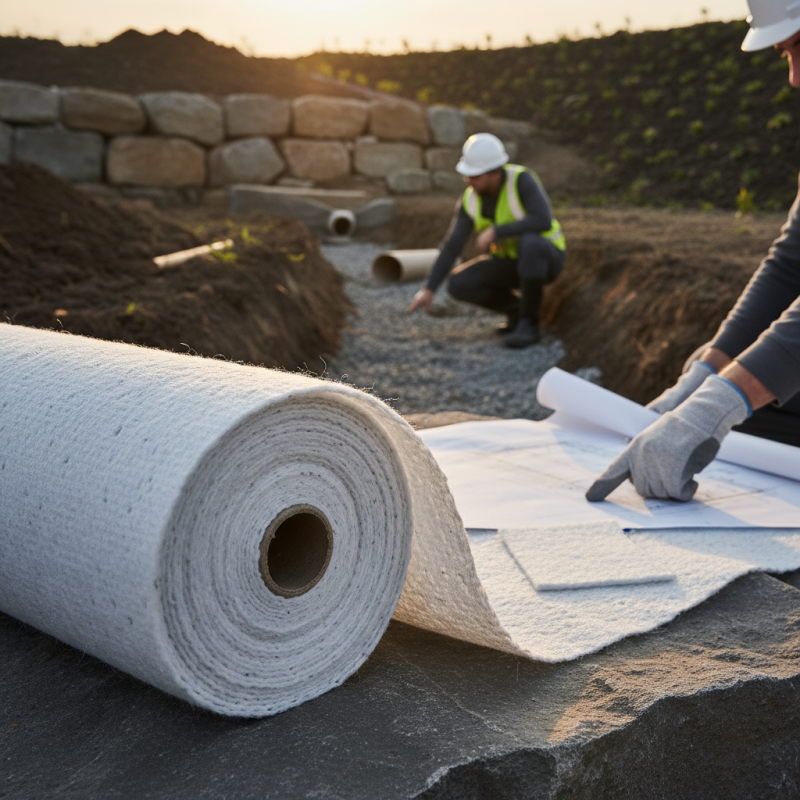
How to Choose the Right Needled Filament Geotextile for Your Project?

Understanding the Basic Properties of Needled Filament Geotextiles

Needled filament geotextiles are essential for many engineering projects. They provide reinforcement, separation, and drainage. Understanding their properties is critical for choosing the right type for your needs.

These geotextiles are made from continuous filaments. They have high tensile strength and are resistant to UV rays. A recent industry report highlights that needled filament geotextiles can have a tensile strength of up to 200 kN/m. This strength helps them withstand harsh conditions. Their porosity allows for quick drainage, making them ideal for soil erosion control.

Tip: Always evaluate the specific soil conditions before selecting a geotextile type. Different projects may require unique characteristics in fabric density and filtration ability.

It is essential to acknowledge the importance of appropriate installation. Misalignment or improper covering can lead to failure. Ensure the geotextile is laid flat and properly anchored. Regular inspections after installation can identify potential issues early on.

Tip: Incorporate a quality control process during installation. This practice can significantly improve performance and longevity. Understanding these basic properties equips you to make informed decisions for successful project outcomes.

Comparison of Needled Filament Geotextile Properties

Identifying Project Requirements: Load Support and Drainage Needs

When selecting a needled filament geotextile, it is essential to identify the project requirements, specifically regarding load support and drainage needs. Understanding the weight that the geotextile must support is crucial. Different projects may demand different levels of strength. For instance, road construction requires a more robust material compared to a landscaping project. Assessing the expected loads can help avoid inadequate materials. Additionally, the type of soil and its characteristics should be considered to determine the appropriate choice.

Drainage is another pivotal factor in making an informed decision. Effective water management can prevent soil erosion and maintain structural integrity. A geotextile with superior drainage capabilities can wick moisture away from the soil, ensuring stability. However, it is important to validate the drainage needs based on the project’s location and potential weather conditions. Some sites may require enhanced filtration, while others might need basic moisture control. Balancing these features can be a challenge, and careful consideration of the project specifics will lead to a more efficient solution.

Comparative Analysis of Needled Filament vs. Other Geotextile Types

Needled filament geotextiles are popular for their unique composition and function. They primarily consist of continuous filament fibers, making them more durable than woven or non-woven geotextiles. Research shows that they excel in applications requiring significant mechanical strength and puncture resistance. For instance, a study from the Geosynthetic Institute indicates that needled filaments outperform woven types in load-bearing capacity by over 20%. This aspect makes them a reliable choice in heavy-duty applications like road construction and landfill projects.

In a comparative analysis between needled filament geotextiles and other types, several key differences emerge. Non-woven geotextiles, while versatile and cost-effective, may not match the structural integrity of needled options. A report from the International Geosynthetics Society highlights that needled filaments exhibit superior filtration ability. This quality proves critical in environments where soil stabilization is essential. However, some engineers still question their cost-effectiveness relative to traditional geotextiles in all scenarios, suggesting that project specifications matter greatly.

While needled filament geotextiles boast impressive qualities, potential drawbacks exist. Installation can be more complex due to their weight and stiffness, which could slow project timelines. Furthermore, selecting the right type depends on multiple factors, including budget and intended use. This complexity can complicate decision-making, leading stakeholders to overlook suitable alternatives. Engaging experts in geosynthetic solutions can help in making informed choices, leading to more successful project outcomes.

Evaluating Environmental Conditions: Durability and Longevity Factors

When selecting needled filament geotextiles, evaluating environmental conditions is crucial for ensuring durability and longevity. Environmental factors significantly impact the performance of these materials. According to a report by the Geosynthetic Institute, UV exposure can reduce the lifespan of geotextiles by up to 50% if not properly evaluated. Selecting materials resistant to UV degradation can extend project longevity.

Another critical aspect involves thermal conditions. Extreme temperatures can lead to material degradation. Research indicates that temperature fluctuations of over 20°C can affect the structural integrity of synthetic filaments. Evaluating local climate conditions helps project managers choose appropriate geotextiles for their applications. It is essential to consider the specific environmental challenges in your project area.

Additionally, soil compatibility plays a key role. Improper selection based on soil chemistry can result in unexpected failures. A study showed that 30% of geotextile failures were linked to incompatible soil conditions. Understanding both soil type and environmental impacts can inform better material choices. A holistic approach ensures more reliable and effective geotextile performance for any project.

Cost-Benefit Analysis: Budgeting for Needled Filament Geotextiles

When budgeting for needled filament geotextiles, a cost-benefit analysis is essential. A recent industry report suggests that the installation of these geotextiles can reduce soil erosion by up to 50%. This significant reduction can lead to lower maintenance costs over time. For example, a project that implements these materials can save about 20% in long-term site maintenance compared to traditional methods.

However, it's crucial to assess the upfront costs. According to data from the Geosynthetic Institute, the average price range for needled filament geotextiles is between $0.50 and $2.00 per square meter. While this may seem high, the durability of these materials often results in a lower cost per square meter over time. A careful analysis reveals that selecting a higher-quality geotextile can provide better performance and longevity.

Evaluating the trade-offs is key. While the initial investment may be higher, potential savings on repairs and environmental restoration should not be overlooked. Each project is unique, and the right choice will depend on specific site conditions and long-term goals. Balancing these factors requires experience and careful planning.

FAQS

: What are needled filament geotextiles?

: They are continuous filament materials used for reinforcement, separation, and drainage in engineering projects.

How strong are needled filament geotextiles?

They can have a tensile strength of up to 200 kN/m, making them durable under harsh conditions.

Why is installation important for geotextiles?

Improper installation can lead to failure. Ensuring they are flat and well-anchored is crucial.

How do needled filaments compare to woven geotextiles?

Needled filaments are more durable and better at load-bearing, exceeding woven types by over 20%.

What environmental factors affect geotextile longevity?

UV exposure and temperature fluctuations can degrade performance. Both must be evaluated before selection.

Can soil compatibility impact geotextile performance?

Yes, selecting the wrong material for soil chemistry can result in failures, accounting for 30% of cases.

What challenges exist with needled filament geotextiles?

Their weight and stiffness can complicate installation, potentially delaying project timelines.

Is there a cost concern with needled filament geotextiles?

They may not always be cost-effective compared to traditional types, depending on project specifications.

Should experts be consulted for geosynthetic solutions?

Yes, expert input can guide material selection and improve project outcomes.

What key aspect should be monitored after installation?

Regular inspections can identify potential issues early, ensuring better performance over time.

Conclusion

Choosing the right Needled Filament Geotextile for your project requires a comprehensive understanding of its basic properties, including its load support and drainage capabilities. It is essential to identify specific project requirements, as these will guide your selection process. A comparative analysis of Needled Filament Geotextiles against other types reveals their unique advantages, particularly in terms of strength and performance in diverse applications.

Furthermore, evaluating environmental conditions is crucial, as factors such as durability and longevity will significantly influence the effectiveness of the geotextile in the long run. Conducting a thorough cost-benefit analysis will also help in budgeting for Needled Filament Geotextiles, ensuring that you make an informed choice that aligns with both project goals and financial considerations.


Henry

Henry

Henry is a dedicated marketing professional with a profound expertise in the company's offerings. With years of experience in the industry, he possesses an impressive understanding of the market dynamics and consumer behaviors that drive success. Henry is committed to sharing his insights through......