Choosing Clay Drainage Tiles for global projects requires more than comparing color, price, or surface texture. These tiles must manage water, soil pressure, temperature changes, and long-term maintenance. A reliable selection begins with the project location, drainage volume, soil conditions, and installation method.
Performance depends on several details. Tile dimensions affect flow capacity and joint spacing. Firing temperature influences strength, absorption, and resistance to frost. In coastal areas, salt exposure deserves careful review. Freeze-thaw regions may require documented testing, not general marketing claims. Local engineers should also verify compliance with regional drainage standards and construction practices.
Small details matter.
Experienced project teams normally request technical datasheets, test reports, sample pieces, and installation guidance before approval. They may compare water absorption, compressive strength, dimensional tolerance, and expected service conditions. Supplier history is equally important. Consistent quality records can reveal more than a polished product brochure.
However, no material choice is perfect. A tile that performs well in dry soil may struggle where groundwater remains high. A lower purchase price may also create higher handling or replacement costs. This guide examines practical criteria for selecting Clay Drainage Tiles across different climates, regulations, and supply chains. It also highlights common assumptions that deserve a second look, because successful drainage depends on the complete system, not the tile alone.
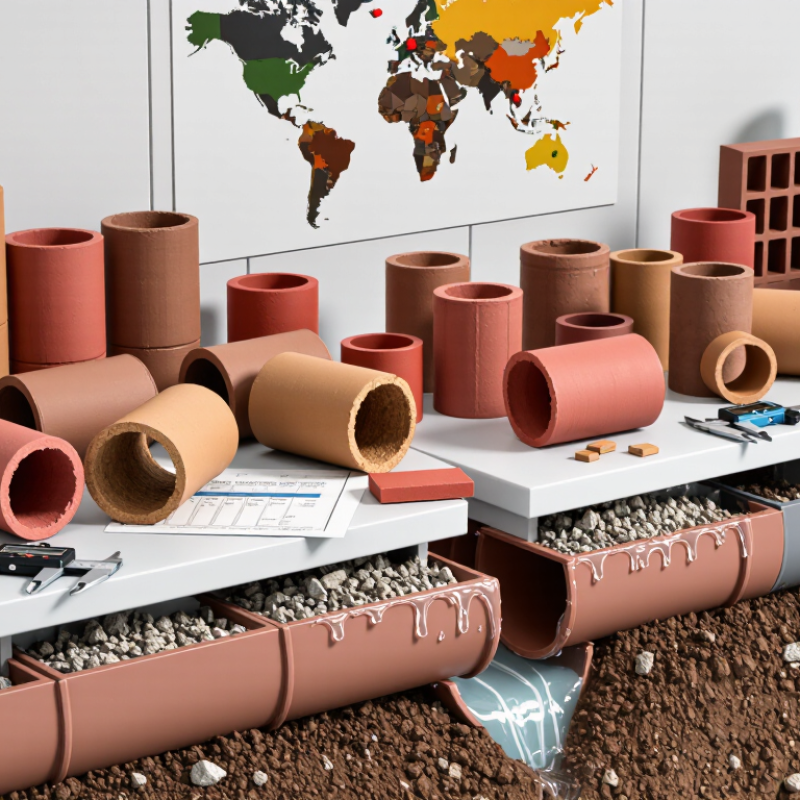
Clay drainage tiles are fired clay pipes or modular channels that move excess water away from soil, foundations, and paved areas. Their applications vary widely, from agricultural fields in wet climates to residential landscaping and historic streets. The right choice depends on local soil, rainfall, frost exposure, and expected water flow.
Check the tile’s diameter, wall thickness, joint design, and perforation pattern before ordering. Smaller perforations can limit soil entry, but they may clog without suitable filter fabric and clean gravel. In freezing regions, low water absorption and proven frost resistance are essential. In hot areas, strong firing and careful bedding help reduce cracking during installation. Ask suppliers for test data, dimensional tolerances, and compliance with relevant regional standards.
Site experience often reveals problems that product sheets miss. A tile may perform well in clay soil but drain too slowly in compacted fill. It may also need more maintenance than expected. I would inspect the trench slope, outlet protection, and access points before selecting a final design. Uneven joints can allow soil movement, while excessive slope may carry fine particles into the outlet. Clay is durable, but it is not indestructible. Transport damage, poor backfilling, and unnoticed settlement can shorten its service life. Trial sections and local drainage advice provide more reliable evidence than appearance alone.
How to Choose Clay Drainage Tiles for Global Projects?
Clay drainage tiles should be selected from site evidence, not from appearance. Start with soil texture, structure, and seasonal water levels. Sandy soils drain quickly, while compacted clay can hold water above the tile. Field infiltration tests and trial pits reveal conditions that maps often miss. Soil salinity also matters. Salt can weaken vegetation and increase maintenance demands.
Climate changes the design risk. The FAO AQUASTAT database reports that agriculture uses about 72% of global freshwater withdrawals. Efficient drainage must remove excess water without wasting irrigation resources. The WMO State of the Global Climate 2023 reported record global temperatures and widespread extreme weather. Therefore, tile spacing, outlet capacity, and joint protection should reflect heavier rainfall events. Local frost depth matters too. In tropical sites, high groundwater and intense storms may require deeper inspection access.
Tips: Test soil after rain. Check tile strength against local loading. Confirm the outlet during peak flow. Use filters where fine particles may enter joints. I prefer reviewing at least one wet-season record before approving a layout. A laboratory result is not the field. One project taught me that neglected surface runoff caused more damage than the tiles themselves. Designs need revision when site evidence disagrees.
For global projects, clay drainage tiles deserve more than a traditional-material label. They are fired, chemically stable, and resistant to many soils. However, they are heavier and more brittle than PVC or concrete. According to the FAO AQUASTAT database, agriculture represents roughly 70% of global freshwater withdrawals, making reliable field drainage essential in many regions. Clay suits permanent trenches where bedding, transport, and joint protection are carefully controlled.
Shape changes performance. Round tiles usually provide smoother flow and simpler hydraulic calculations. Oval sections can fit shallow trenches, but their capacity needs verification. Perforated tiles collect groundwater through their walls, while open-jointed tiles depend strongly on soil grading and filter fabric. Common diameters include 100, 150, and 200 millimetres. Bigger is not automatically better. The designer should check rainfall intensity, slope, infiltration, and sediment loading.
Hydraulic sizing should use the Manning equation, not visual judgment. The CIRIA SuDS Manual recommends evaluating roughness, gradient, storage, and maintenance together. A small tile with a steep, clean run may outperform a larger tile with blocked joints. That detail is often missed. Clay surfaces can remain hydraulically efficient, but installation damage may reduce real performance. I would also question any design using one roughness value for every soil and joint condition. Field inspection, local standards such as EN 295, and project-specific testing remain necessary, especially where freeze-thaw cycles, expansive clay soils, or heavy maintenance equipment are expected.
Comparing tile materials, shapes, sizes, and drainage performance through theoretical full-flow capacity.
This comparison uses circular, smooth-bore drainage tiles or pipes at a 1% hydraulic slope. Capacities are calculated with the Manning equation using typical roughness coefficients of n = 0.013 for vitrified clay and concrete, and n = 0.009 for HDPE. Actual performance depends on joint condition, sediment, installation quality, slope, and local standards.
How to Choose Clay Drainage Tiles for Global Projects?
Clay drainage tiles should match the project’s climate, soil, and regulatory requirements. Check national standards for dimensions, water absorption, compressive strength, and freeze-thaw performance. Testing documents must identify the method, sample size, and production date. A certificate alone is not the whole answer. Ask whether independent laboratories verified the results.
Durability depends on real site conditions. In coastal areas, examine salt exposure and joint stability. In industrial zones, review resistance to acidic or alkaline soil. On site, installers often reject tiles with hairline cracks or uneven edges. This simple inspection prevents later leakage. Yet, appearance can mislead. Some strong tiles still fail when bedding is unstable.
Tips: Confirm the design slope before delivery. Use a firm, level base with compatible bedding material. Keep joints clean and properly sealed. During installation, protect tile ends from impact. Record batch numbers and photographs for future maintenance. These details feel minor.
Maintenance plans should include inspections after heavy rain, frost, or ground movement. Check blocked outlets, displaced tiles, open joints, and unusual wet areas. Remove sediment with approved tools, not uncontrolled force. Replace damaged sections with matching dimensions and performance data. Local installers understand soil behavior better than remote assumptions. Still, project teams should document their advice and review it against the approved design. Mistakes happen. Good records make correction faster.
| Selection Dimension | What to Check | Relevant Technical Requirement | Recommended Project Action |
|---|---|---|---|
| Applicable product standard | Confirm whether the product is classified as a vitrified clay pipe, clay drainage channel, or another ceramic drainage component. | For vitrified clay pipes and fittings, EN 295 is widely used in Europe, while ASTM C700 covers vitrified clay pipe for sewer and industrial drainage applications in the United States. | Identify the governing national or project specification before procurement. Do not assume that compliance with one regional standard automatically satisfies another. |
| Dimensional compatibility | Verify nominal size, internal diameter, effective length, wall thickness, socket dimensions, joint profile, and allowable tolerances. | Components must match the specified hydraulic capacity and the dimensions of connecting pipes, inspection chambers, traps, and fittings. | Require dimensional drawings and verified tolerances. Use compatible couplings or transition fittings when connecting clay components to concrete, PVC, HDPE, or metal systems. |
| Hydraulic performance | Assess internal smoothness, hydraulic gradient, pipe diameter, flow rate, and the risk of sediment accumulation. | Vitrified clay has a relatively smooth, non-porous internal surface, but the installed system still depends on correct slope, joint alignment, and adequate access for cleaning. | Size the drainage line using the project hydraulic calculation. Avoid unnecessary changes in direction and provide access points at locations required by local codes. |
| Chemical resistance | Review wastewater composition, soil chemistry, industrial contaminants, sulfates, acids, and cleaning chemicals. | Properly vitrified clay generally provides strong resistance to many chemically aggressive soils and wastewater environments, but joint materials and surrounding components may have different limits. | Obtain chemical-resistance data for the clay body and the complete joint system. Conduct a project-specific compatibility review for industrial or unusually acidic discharge. |
| Abrasion and solids resistance | Consider sand, gravel, grit, mining particles, industrial solids, and expected flow velocity. | Dense vitrified clay is suitable for many abrasive drainage conditions, but impact from large solids or uncontrolled construction debris can cause damage. | Control debris during construction, use suitable manhole arrangements, and specify inspection after installation where abrasive solids are expected. |
| Freeze–thaw and climate exposure | Evaluate freeze–thaw cycles, groundwater conditions, water saturation, thermal movement, and seasonal soil movement. | Clay components are rigid and can perform in cold climates when correctly manufactured, bedded, joined, and protected from water-related movement. Saturated soil and poor drainage can increase risk. | Follow the local installation standard for granular bedding, haunching, cover depth, and groundwater control. Confirm the product’s climatic and durability classification where required. |
| Structural loading | Check traffic loads, construction loads, burial depth, trench width, soil type, groundwater, and potential settlement. | Clay drainage products are rigid; their performance depends heavily on bedding quality, side support, joint integrity, and the interaction between the pipe and surrounding soil. | Complete a structural design for the actual installation conditions. Prevent heavy equipment from crossing shallow or incompletely backfilled trenches. |
| Jointing and watertightness | Review joint type, sealing material, allowable angular deflection, infiltration limits, and connection details. | A durable clay drainage system requires correctly sized and properly installed flexible or specified sealed joints. Excessive deflection can damage the joint or the ceramic component. | Use only the joint materials and installation procedure specified for the product. Test the completed line for leakage where required by the project specification. |
| Installation method | Confirm trench preparation, foundation conditions, bedding material, pipe handling, alignment, backfilling, and compaction sequence. | Clay products are strong in compression but comparatively brittle under point impact. Uneven support, dropping, or concentrated loading can cause cracking. | Inspect every piece before installation, lower components carefully, provide continuous bedding, maintain alignment, and compact backfill in controlled layers. |
| Quality inspection and testing | Verify factory conformity documents, visual condition, dimensions, joint components, batch traceability, and site testing requirements. | Typical checks include visual inspection, dimensional verification, joint inspection, alignment checks, and leakage or CCTV testing where specified. | Include inspection hold points in the quality plan. Record product batches, rejected components, installed locations, test results, and corrective actions. |
| Maintenance access | Determine cleaning frequency, access chamber spacing, rodding requirements, flushing arrangements, and inspection needs. | Clay drainage lines can have long service lives, but blockages, root intrusion, displaced joints, and external settlement still require periodic inspection and maintenance. | Provide accessible inspection chambers and cleaning points. Keep maintenance records and use non-destructive inspection methods where practical. |
| Repair and replacement | Plan for localized cracking, damaged joints, settlement, blockage, and connections to different pipe materials. | Repairs generally require exposing the affected section, removing damaged components, checking the bedding and surrounding soil, and installing compatible replacement parts. | Store approved repair couplings and transition fittings on major projects. Recheck the cause of failure before replacing the damaged section. |
| Sustainability and service life | Compare expected service life, maintenance frequency, recycled content, transport distance, and end-of-life recovery options. | Clay is made from mineral raw materials and is durable in service, but environmental performance depends on extraction, firing energy, product weight, logistics, and project lifespan. | Request verified environmental information where required, assess whole-life cost, and include durability and maintenance intervals in the project comparison. |
| Local regulatory approval | Check drainage authority requirements, building regulations, public works specifications, environmental permits, and inspection procedures. | Requirements vary by country and application. Public sewerage, stormwater, industrial drainage, and private site drainage may be governed by different rules. | Obtain written approval from the relevant authority and coordinate the product submittal with the civil, structural, hydraulic, and environmental design documents. |
How to Choose Clay Drainage Tiles for Global Projects?
Choosing clay drainage tiles for global projects requires more than comparing unit prices. Start with soil reports, rainfall data, frost exposure, and expected load. A tile that performs well in a mild climate may crack after repeated freeze-thaw cycles. During a pilot order, inspect wall thickness, joint fit, water absorption, and edge damage. Keep dated photographs and test records. These details help buyers challenge vague specifications and support consistent approvals.
International sourcing needs a practical supplier review. Check production capacity, kiln controls, packaging methods, export experience, and replacement procedures. Request samples from the same production line used for the contract batch. This matters. Clay products are heavy and fragile. Calculate the landed cost, including tooling, inland delivery, ocean freight, insurance, port handling, duties, storage, and breakage. A cheaper factory price can become expensive after one damaged container or delayed vessel. Use pallets with separators, moisture protection, and clear loading diagrams. Leave room for inspection costs; budgets often ignore them.
Compliance varies by destination and project type. Confirm dimensional standards, structural requirements, fire classifications, environmental documentation, and customs descriptions with qualified local professionals. Ask for test reports from accredited laboratories, not only internal statements. Check whether packaging materials meet import rules. Product labels and invoices should match the declared material and quantity. I have seen schedules slip because a certificate used an outdated standard. Build time for corrective testing. Do not assume every tile is interchangeable. A small profile difference can disrupt gradients, fittings, and site labor. Review installation methods with the engineer before purchase, especially when drawings are incomplete or translated poorly.
They carry excess water away from fields, foundations, garden beds, and paved surfaces. They can support permanent drainage trenches. Their suitability depends on soil, rainfall, frost, and expected flow.
Review diameter, wall thickness, joint design, slope, infiltration, rainfall intensity, and sediment loading. Common diameters include 100, 150, and 200 millimetres. Larger is not automatically better. Use hydraulic calculations, not appearance alone.
Round tiles usually provide smoother flow and simpler calculations. Oval tiles may fit shallow trenches, but their capacity needs checking. Perforated walls collect groundwater; open joints depend heavily on soil grading and filtration. Not always predictable.
Use a firm, level base with compatible bedding material. Clean gravel and suitable filter fabric can reduce soil entry. Small perforations may clog without protection. Excessive slope can carry fine particles toward the outlet.
Freezing regions require low water absorption and proven frost resistance. Hot climates need strong firing and careful bedding to limit cracking. Coastal sites require salt exposure and joint stability checks. Expansive soils deserve extra caution.
Inspect every tile for hairline cracks, uneven edges, and transport damage. Confirm the trench slope and outlet protection before delivery. Keep tile ends safe from impact. A trial section can reveal problems that product sheets miss.
Inspect them after heavy rain, frost, or ground movement. Check outlets, displaced tiles, open joints, sediment, and unusual wet patches. Use approved cleaning tools, not uncontrolled force. Mistakes happen. Good records make repairs faster.
Clay is chemically stable and durable in many soils, but it is heavier and more brittle. Poor backfilling, settlement, and joint movement can shorten service life. Performance depends on installation as much as material. I would not trust appearance alone.
Choosing Clay Drainage Tiles for global projects requires a careful evaluation of both technical performance and local conditions. Begin by understanding how these tiles collect and redirect groundwater, then assess soil type, rainfall, temperature changes, groundwater levels, slope, and site access. Tile material, shape, diameter, wall thickness, joint design, and drainage capacity should match the project’s expected water volume and installation environment. Larger or more robust tiles may be suitable for heavy-duty applications, while smaller designs can support residential, agricultural, or landscape drainage systems.
Before purchasing, confirm applicable quality standards, load resistance, water flow performance, service life, and resistance to soil chemicals and freeze-thaw cycles. Installation planning should include bedding, alignment, connections, filtration, inspection access, and maintenance procedures to reduce clogging and settlement risks. For international sourcing, buyers should also compare production lead times, packaging, transportation methods, import documentation, total landed costs, and destination-country compliance requirements. A balanced selection process helps ensure reliable drainage, efficient installation, and long-term project value.

Changhong