Choosing the right Flexible Soft Permeable Pipe can significantly impact various applications. According to industry reports, the global permeable pipe market was valued at over $2 billion in 2022. This growth highlights the increasing demand for efficient drainage solutions. Proper selection is critical to maximize functionality and performance.
Flexible Soft Permeable Pipes offer versatility in construction and landscaping. They provide effective water management while allowing for soil aeration. However, not all products are created equal. It's essential to consider the specific requirements of your project before making a decision. Reviews from experts suggest that durability and permeability are key factors in choosing the best pipe.
When selecting a Flexible Soft Permeable Pipe, you need to assess material composition and flow capacity. The wrong choice can lead to issues such as clogging or insufficient water drainage. Industry insights emphasize the importance of manufacturer reputation and product testing. It's wise to consult with professionals to ensure that your selection meets industry standards and performance expectations.
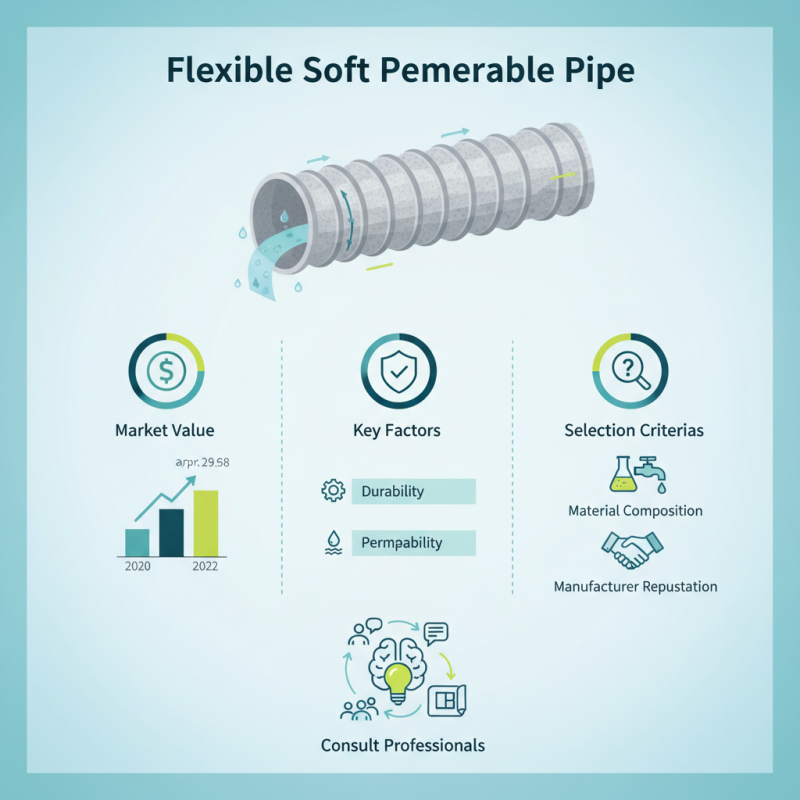
Flexible soft permeable pipes are essential in various applications, from agriculture to construction. Understanding their distinct properties is crucial for making informed choices. These pipes allow water and air to pass through, reducing pressure buildup and preventing damage. According to industry reports, the global market for permeable pipes is projected to reach $2.5 billion by 2027, underscoring their growing importance.
The construction of flexible soft permeable pipes typically includes materials like PVC or EPDM. These materials contribute to their tear resistance and flexibility. Data from the American Society of Civil Engineers indicates that proper drainage management can enhance soil quality and reduce erosion by up to 40%. Such statistics highlight the potential environmental benefits of using these pipes effectively.
Choosing the right pipe requires careful consideration of application specifics. Factors like flow rate, pipe diameter, and material quality are key. However, many users overlook these details, leading to ineffective installations. Reflecting on your project needs is necessary. Understanding local soil conditions or water levels can impact your decision significantly. Adapting to specific environments increases the success rate of installations and overall project efficiency.
When selecting a flexible soft permeable pipe, it's essential to pinpoint your specific needs and applications. Different environments and tasks require unique characteristics. Consider factors such as material, flexibility, and durability. Each application may demand a different level of permeability and strength. For instance, landscaping projects might need pipes that can adapt to various soil conditions.
Tips: Evaluate the environmental conditions where the pipe will be used. Harsh weather or chemical exposure can impact performance.
Another aspect to consider is the flow rate required for your project. Low flow rates may work for garden irrigation, while high flow rates might be necessary for drainage systems. Measuring your needs correctly prevents future issues.
Tips: Don’t overlook potential installation challenges. Ensure the pipe can be installed easily in your chosen location. It saves time and frustration during the process.
By understanding the nuances of your needs, you can select a pipe that fits perfectly. Take time to review your options carefully. Remember, the right choice today leads to smoother operations tomorrow.
This chart shows the comparison of different flexible soft permeable pipes based on their application suitability, flexibility, and permeability ratings.
When selecting a flexible soft permeable pipe, material options are crucial. Different materials offer varied durability levels. For example, some polymers resist chemicals and UV light, while others may degrade faster. Understanding the environment where the pipe will be used is essential. Consider exposure to harsh elements or temperature fluctuations. These factors can significantly impact the longevity of the pipe.
Durability is not just about material. It also depends on how the pipe is handled and installed. Poor installation can lead to leaks or failures, even in high-quality materials. Always evaluate the specific requirements of your project, from pressure needs to flexibility. In some cases, over-specifying can lead to unnecessary costs.
Assessing long-term performance is often overlooked. Some pipes may seem cheaper initially but require more maintenance over time. This often leads to higher costs. A reliable product should not only meet current needs but also adapt to future requirements. Examining usage scenarios can reveal potential weaknesses. It’s wise to be cautious and seek expert advice if uncertainties arise.
When selecting flexible soft permeable pipes, understanding fluid compatibility is essential. Different materials interact uniquely with various chemicals and environmental factors. For example, a report by the American Society for Testing Materials indicates that certain polymers may degrade when exposed to solvents, leading to significant system failures. This highlights the necessity for thorough testing before making a choice.
Environmental conditions also play a crucial role. Temperature fluctuations can affect material integrity, while exposure to UV light or moisture may lead to premature wear. According to the Plastics Industry Association, 40% of pipe failures result from environmental incompatibilities. Assessing the specific conditions of use helps ensure longevity and reliability of the pipes. However, getting accurate environmental data can be challenging, leading to mistakes in pipe selection.
Industry standards provide some guidance, but they might not capture all nuances. It's critical to ensure that the selected pipe not only meets basic performance requirements but also aligns with the specific fluid characteristics and environmental conditions of your application. This process requires experience and attention to detail to avoid costly errors later on.
Selecting a flexible soft permeable pipe requires careful consideration of installation and maintenance. Understanding the environment where the pipe will be installed is crucial. Soil conditions, temperature variations, and surrounding vegetation can all affect performance.
When installing, ensure proper techniques. The pipe must lay flat to avoid bends. Regular checks are essential to spot potential blockages. Over time, sediment buildup can occur. This can lead to reduced flow rates. A wise choice now could save headaches later.
Tips: Regular inspections play a key role. Schedule them every few months. Maintain a clean environment around the pipe to prevent debris buildup. Be mindful that weather changes can impact durability. Planning for replacements can minimize disruptions in water flow.
: Identify your specific needs and applications. Focus on material, flexibility, and durability.
Harsh weather or chemical exposure can impact how well a pipe performs over time.
Measure your flow requirements. Garden irrigation may need low flow, while drainage systems require higher flow rates.
Yes, ensure the pipe is easy to install. Complicated setups can waste time and lead to frustration.
Different materials offer different durability. Some are resistant to chemicals and UV light, others degrade faster.
Proper installation is crucial. Poor handling can cause leaks, even with high-quality pipes.
Absolutely. Cheaper options may incur more maintenance costs over time, leading to higher expenses.
Yes, over-specifying can lead to unnecessary costs. Evaluate what’s truly required for your project.
Review all options carefully and consider seeking expert advice when unsure about your choices.
Choosing the right Flexible Soft Permeable Pipe requires a systematic approach to ensure it meets your specific needs and applications. First, it is essential to understand the basic characteristics of these pipes, including their permeability and flexibility, which impact their performance in various environments. Identifying your specific requirements will guide the selection process, as different applications may necessitate varying levels of chemical resistance and structural integrity.
Next, evaluating the available material options is critical for determining durability and compatibility with the fluids the pipe will convey. It's also important to consider the environmental conditions, such as temperature and pressure, that the Flexible Soft Permeable Pipe will encounter. Finally, don't overlook the installation and maintenance aspects, as these factors can significantly affect the pipe's longevity and functionality. By carefully considering these elements, you can select the most suitable Flexible Soft Permeable Pipe for your project.

Changhong