7 Best Dimple Drain Sheets for Foundation Drainage

Time:2026-11-02 Author:Liam
0%

Dimple Drain Sheets help manage groundwater around foundation walls by creating a drainage space between soil and the structure. Their raised dimples form channels that can guide water toward a footing drain, while the sheet also helps shield waterproofing from backfill damage. They are useful, but not magic. A drainage sheet cannot correct poor grading, a blocked outlet, or an unsuitable foundation detail.

Choosing the right product means looking beyond price and dimple height. Check the material, compressive strength, drainage capacity, installation method, and compatibility with the waterproofing layer. Some sheets include a geotextile filter to reduce soil intrusion; others rely on a separate fabric or a specific placement orientation. That matters. A small mismatch at a seam or termination can become a weak point once soil is returned against the wall.

This guide compares seven options for different foundation conditions and installation needs. You’ll find details that help distinguish lightweight residential products from more robust systems, along with practical questions to ask before buying. Consider local soil, expected water pressure, wall height, and where the collected water will discharge. Small details count. Product specifications can look similar, and marketing language does not always reveal how a sheet performs in a complete drainage assembly. Use manufacturer instructions and, when site conditions are uncertain, seek advice from a qualified drainage or foundation professional. The best choice is the one that suits the whole system—not simply the one with the most prominent numbers on its label.
7 Best Dimple Drain Sheets for Foundation Drainage

What Dimple Drain Sheets Are and How They Protect Foundations

7 Best Dimple Drain Sheets for Foundation Drainage

What Dimple Drain Sheets Are and How They Protect Foundations

A dimple drain sheet is a molded membrane installed against a below-grade foundation wall. Its raised dimples create a narrow drainage space between the wall and surrounding soil. Water entering this space can flow downward toward a footing drain, rather than pressing directly against the wall. The sheet helps manage water; it is not a substitute for sound waterproofing or a clear outlet. The 2021 International Residential Code, Section R405.1, calls for foundation drains in many below-grade conditions. That requirement reflects a basic principle: give water a reliable path away.

Hydrostatic pressure rises with water depth. A standard engineering calculation gives about 0.433 psi per foot of standing water, or roughly 2.6 psi at six feet. Small openings and poor drainage can therefore matter. Still, it is easy to overtrust the dimples. A clogged footing drain, crushed membrane, or badly sealed termination can undermine the system. Installation details deserve careful inspection.

Tips: Check that the sheet reaches the footing drain and that its top edge is properly terminated. Keep soil and construction debris out of the drainage path. Confirm outlet function before backfilling; a covered drain is difficult to assess later.

How Foundation Drainage Systems Use Dimple Sheets

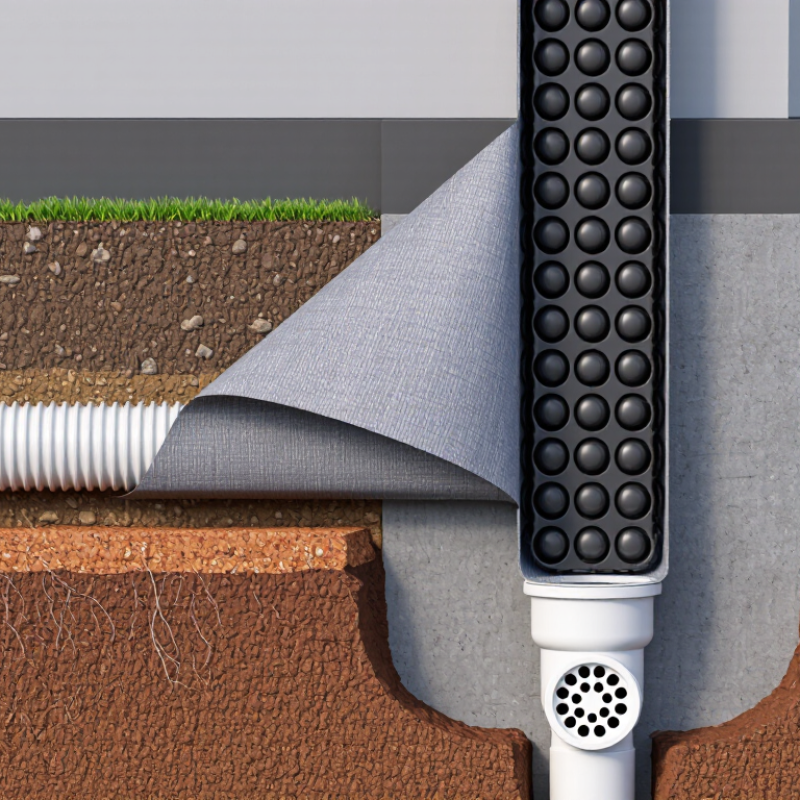
A dimple drain sheet creates a narrow drainage cavity between a foundation wall and the surrounding soil. Its raised cups face the wall or soil according to the system design, leaving channels for water to move downward. That gap matters. It can reduce hydrostatic pressure against the wall when water reaches the footing drain and has a clear route away. The sheet may also help protect the waterproofing layer from soil contact and minor abrasion during backfilling. It is not a waterproofing membrane by itself.

At the base of the wall, the drainage path needs to connect with a functioning footing drain, often surrounded by washed stone and filter fabric. The top edge should be finished to limit soil and debris entering the cavity, while corners and penetrations need careful detailing. Small installation gaps can interrupt the path. I would not rely on the sheet to compensate for poor grading, a blocked drain, or a high water table; those conditions may need a broader drainage plan. Check the specified orientation, fasteners, and termination details before backfilling, because requirements vary with the sheet and wall assembly. Even a neat installation deserves inspection. It is easy to miss a crushed section until the soil is back in place.

7 Best Dimple Drain Sheets for Foundation Drainage - How Foundation Drainage Systems Use Dimple Sheets

Compare common dimple-sheet and drainage-board configurations by profile, drainage arrangement, and intended use. The best choice depends on the foundation design, soil conditions, waterproofing system, and drainage outlet.

Option Typical profile Drainage arrangement Often suited to Important selection checks
1. Low-profile dimple sheet Approximately 4–6 mm dimple height Small air gap between the sheet and substrate; water needs a clear path to an outlet. Projects with limited space or modest drainage requirements. Confirm the available flow capacity and whether the profile is appropriate for the expected water load.
2. Standard-profile dimple sheet Approximately 8–10 mm dimple height Dimples create a drainage void that channels water downward toward perimeter drainage. Common foundation-wall drainage and protection applications. Check compressive strength, compatibility with the waterproofing layer, and connection to the footing drain.
3. Medium-profile dimple sheet Approximately 10–12 mm dimple height A deeper drainage space than low-profile sheets, subject to the product’s tested capacity and installation details. Foundations where additional drainage space is desired and wall projection allows it. Verify the manufacturer’s flow data under the expected soil pressure; profile height alone does not determine performance.
4. Deep-profile dimple sheet Often around 20 mm; profiles vary Deeper channels can provide a larger drainage void when properly connected to a suitable outlet. Projects calling for a higher-profile drainage layer or greater separation from backfill. Check wall loading, allowable compression, fastening method, and compatibility with the drainage system.
5. Geotextile-faced dimple sheet Commonly paired with profiles around 8–12 mm A bonded filter fabric faces the soil and helps limit soil particles entering the drainage channels. Soil-contact installations where filtration is needed at the drainage-board face. Select fabric opening and permeability for the soil; protect the fabric from damage and keep the bottom outlet unobstructed.
6. Geocomposite drainage board Uses a drainage core; core thickness and structure vary A geonet or other structured core combined with a filter fabric provides a defined in-plane water path. Designs requiring documented drainage capacity or a specified composite drainage layer. Use tested flow data for the design load and gradient; confirm filter compatibility, seams, and discharge details.
7. Protection-focused dimple membrane Often around 8–10 mm; profiles vary Dimples create separation and can provide a drainage path, but the membrane does not replace a complete drainage outlet. Protecting a compatible below-grade waterproofing layer during backfilling. Confirm it is approved for the waterproofing system and that water can reach a functioning footing drain or other designed outlet.

Note: Dimple heights are representative ranges for common configurations, not universal specifications. Product dimensions, compressive strength, filtration properties, and drainage capacity vary. Follow project drawings, local requirements, and the selected system’s installation instructions.

Key Features to Compare in the Seven Best Dimple Drain Sheets

When comparing dimple drain sheets, look beyond the raised pattern. Dimple height and spacing affect the drainage channel behind the foundation, while sheet thickness and compressive strength indicate how well it may resist soil pressure. Check test data for the intended installation conditions. A sheet that performs well beside shallow landscaping may not suit a deep basement wall.

Small details matter. A bonded filter fabric can help limit soil particles entering the drainage space, but fabric type should match the surrounding soil. Fine, silty soil may behave differently from coarse gravel. Also compare the stated flow capacity, temperature range, and material durability. Numbers are useful, though test methods can vary, so compare products only when their specifications use similar conditions.

Installation compatibility deserves equal attention. Check how the sheet connects to footing drains, corners, and termination bars, and confirm that its fasteners suit the wall surface. Poorly sealed seams or an obstructed outlet can undermine an otherwise capable panel. It is tempting to choose the tallest dimples, but height alone does not guarantee better drainage. I would also review installation instructions carefully; they can leave practical questions unanswered. Ask how the sheet handles water at the base and whether the fabric faces the soil. Those details can matter once the backfill is in place.

Seven Dimple Drain Sheets for Different Foundation Needs

Seven Dimple Drain Sheets for Different Foundation Needs

Foundation conditions vary, so one dimple sheet will not suit every wall. A standard HDPE sheet can protect waterproofing on a typical residential foundation. A higher-compression sheet may suit deeper backfill, where soil pressure is greater. A high-flow design offers larger drainage channels for sites that collect water quickly. For fine or silty soil, a sheet with a bonded filter fabric can help limit sediment entering the drainage space. Some systems use separate fabric, which may fit irregular details better. Insulated drainage sheets combine water management with thermal resistance. Lightweight rolls can be easier to handle during small repairs. Check the product data; similar-looking dimples can perform differently.

Match the sheet to wall height, soil, expected water flow, and the specified waterproofing. The drainage path must lead to a suitable outlet or footing drain. A membrane alone does not remove water from the site. Confirm that seams, corners, and terminations are installed as directed. I would not choose by thickness alone. It is an easy shortcut, but not a reliable one.

Tips: Before backfilling, inspect the sheet for crushed dimples, open seams, and exposed edges. Keep the outlet clear, and avoid letting soil fill the drainage cavity. When conditions are uncertain, ask a qualified drainage professional to review the design.

7 Dimple Drain Sheet Profiles for Different Foundation Needs

Typical nominal dimple heights shown for comparison; actual sizes vary by product. Dimple height alone does not determine drainage capacity.

Lower profiles can suit projects with limited clearance, while deeper profiles provide a larger drainage cavity. Consider soil conditions, filter fabric, compressive strength, and a suitable drainage outlet when selecting a sheet.

How to Install and Maintain a Dimple Drain Sheet System

A dimple drain sheet creates a drainage cavity beside the foundation, but it is not a substitute for waterproofing. Apply the specified waterproofing to a clean, repaired wall, then install the sheet in the orientation stated in its technical instructions. Secure the top edge with a termination bar and seal it against soil entry. At the base, connect the drainage path to a perforated footing drain set in clean aggregate. Keep seams overlapped and check corners carefully; small gaps can funnel soil into the cavity.

The 2021 International Residential Code, Section R401.3, gives a useful grading benchmark: the ground should fall at least 6 inches within the first 10 feet away from the foundation, where site conditions allow. That is about a 5% slope. A drain sheet cannot compensate for water repeatedly pooling beside the wall. Not a small detail. Before backfilling, photograph the wall, seams, and drain connection; these are difficult to inspect later. Avoid crushing the sheet with machinery or dropping sharp rubble against it.

Maintenance starts at the surface. Keep gutters and downspout outlets clear, and direct roof water away from the foundation. Inspect visible drain outlets seasonally and after heavy storms; clear sediment and check for slow discharge. The Federal Highway Administration’s Geosynthetic Design and Construction Guidelines emphasize evaluating drainage capacity under applied pressure, not relying only on an unloaded flow rating. In practice, confirm the specified sheet suits the soil and burial conditions. I would recheck this choice with the project designer; product details and soils vary.

FAQS

What does a dimple drain sheet do?

It creates a drainage space beside a foundation and helps protect the waterproofing layer. It does not replace waterproofing.

How should I compare dimple drain sheets?

Check dimple height, spacing, thickness, compressive strength, and stated flow capacity. Compare test results only when conditions are similar. Height isn't everything.

Which sheet suits fine or silty soil?

A sheet with bonded filter fabric may help limit soil particles entering the drainage space. Check that the fabric suits the soil; fine sediment can behave unpredictably.

Does a thicker sheet always perform better?

No. Match the sheet to wall height, backfill pressure, soil, and expected water flow. I might still be tempted to choose by thickness alone.

How should the sheet connect to the foundation drain?

Connect its drainage path to a suitable footing drain at the base. Keep seams overlapped, corners secure, and the outlet clear. Not a small detail.

What should I check before backfilling?

Look for crushed dimples, open seams, and exposed edges. Photograph the wall and drain connection; they become hard to inspect later.

How can I reduce water near the foundation?

Keep gutters and downspouts clear, and direct roof water away from the wall. Where site conditions allow, slope the ground away from the foundation.

How should I maintain the drainage system?

Inspect visible outlets seasonally and after heavy storms. Clear sediment and check for slow discharge. I would recheck the design when soil conditions are uncertain.

Conclusion

Dimple Drain Sheets are designed to help manage water around foundation walls by creating a drainage space between the soil and the structure. Their raised dimples form channels that guide water downward toward a suitable drainage outlet, while the sheet can also help protect waterproofing layers from soil contact and pressure. Used as part of a complete foundation drainage system, they can support moisture control and reduce the risk of water buildup around below-grade spaces.

Choosing among different Dimple Drain Sheets involves comparing factors such as material strength, dimple height, drainage capacity, durability, and compatibility with the foundation and site conditions. The best option depends on the project’s soil, water exposure, and installation requirements. Proper installation includes preparing the wall, securing and joining the sheets, and connecting the drainage path to an appropriate outlet. Regular checks for damage, blocked outlets, or disturbed sections can help keep the system working effectively.


Liam

Liam

Liam is a dedicated marketing professional with a profound expertise in the industry, where he excels at highlighting the unique advantages of our core products. With a keen understanding of market trends and consumer needs, Liam frequently updates our company’s professional blog, providing......