The demand for innovative Geo Geocell solutions continues to rise globally. These products enhance soil stability and optimize material usage in various applications. Experts, like Dr. Jane Smith, a leading figure in geotechnical engineering, have emphasized this trend. She stated, "Geo Geocell technology is transforming how we approach ground stabilization."
In regions prone to erosion or instability, Geo Geocell can be a game-changer. For instance, construction projects in coastal areas can greatly benefit from its use. The flexibility of Geo Geocell allows it to adapt to diverse terrains. However, there are challenges in implementing these solutions effectively across different environments.
Investors and builders must understand the unique conditions at each site. Missed assessments can lead to failures. Thus, it's crucial to rely on expert advice and innovative designs. Balancing costs and benefits remains an ongoing debate in the industry. Adopting Geo Geocell solutions may not be a one-size-fits-all approach but can offer significant advantages when tailored correctly.
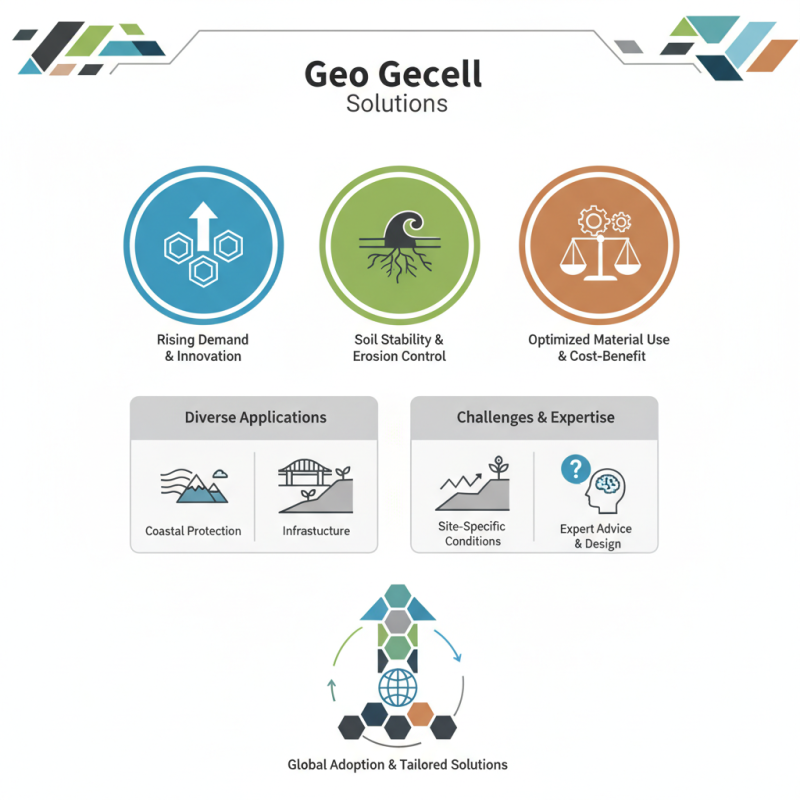
Geocell technology has gained traction worldwide for its versatility and efficiency in various applications. These cellular confinement systems enhance soil stability and reduce erosion, making them essential in civil engineering projects. According to a 2022 market report, the geocell market is expected to grow at a CAGR of 6.7% from 2023 to 2030, highlighting increasing demand in sectors such as transportation, mining, and agriculture.
Geocells can be filled with soil, gravel, or concrete, creating a reinforced mat that improves load distribution. This leads to enhanced stability, especially in soft soil environments. Research indicates that projects using geocells can reduce construction costs by up to 30%. Their effectiveness in road and slope applications demonstrates a need for further innovation and exploration in the usage of geocells.
Tips: Consider the type of infill material used, as it significantly impacts the performance of geocells. Choose materials that are locally sourced to enhance sustainability. Additionally, always review soil conditions to determine suitability for geocell installation, as underlying issues may cause unforeseen complications.
| Application Area | Geocell Type | Material | Load Capacity (kN/m²) | Stability Duration (Years) |
|---|---|---|---|---|
| Road Construction | Monolithic | High-Density Polyethylene (HDPE) | 90 | 25 |
| Erosion Control | Waffle | Polypropylene (PP) | 70 | 20 |
| Soil Reinforcement | Cellular | Geotextile | 100 | 30 |
| Landfills and Waste Management | Reinforced | Composite Material | 80 | 25 |
| Construction of Retaining Walls | Geocell System | Steel | 120 | 50 |
: Geocell technology consists of cellular confinement systems that enhance soil stability and reduce erosion in various applications.
Projects using geocells may reduce construction costs by up to 30%. This can be significant for budget management.
Geocells can be filled with soil, gravel, or concrete, which aids in creating a reinforced mat for better load distribution.
The performance of geocells is significantly affected by the type of infill material. Local materials enhance sustainability.
Review soil conditions to ensure suitability for installation. Unforeseen complications can arise from underlying soil issues.
Analyze physical properties, long-term performance, and user reviews. Certifications can also provide insights into reliability.
Some cheaper products could lead to higher maintenance costs. Always consider the total lifecycle cost for better budgeting.
Engaging with experts can clarify specific project requirements and illuminate aspects that may not be initially clear.
Always budget for unexpected expenses. Construction projects often exceed initial estimations, so financial flexibility is crucial.
Consider soil type, load-bearing needs, and environmental conditions when selecting geocell designs for specific applications.
The article "2026 Top Geo Geocell Solutions for Global Buyers" provides a comprehensive overview of geocell technology and its diverse applications in various infrastructure projects. It highlights the key characteristics that define high-quality Geo Geocell solutions, emphasizing their durability, strength, and effectiveness in soil stabilization and erosion control.
Furthermore, the article outlines the top global suppliers in the geocell market for 2026, showcasing innovative trends that are shaping the future of geo geocell applications. A thorough comparison of different geocell products is also included, focusing on performance metrics and cost analysis, which aids buyers in making informed decisions. As infrastructure demands grow, understanding these aspects of geo geocell technology is crucial for sustainable development and effective project execution.

 Changhong